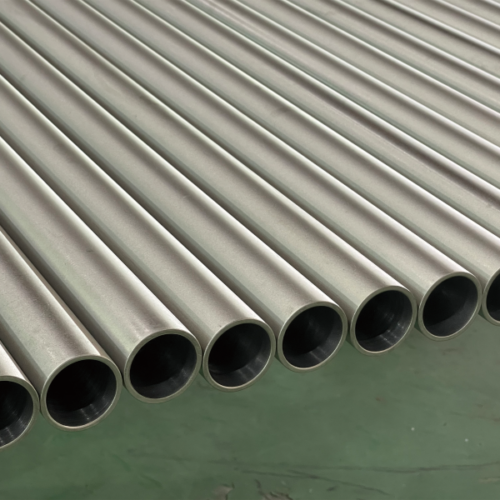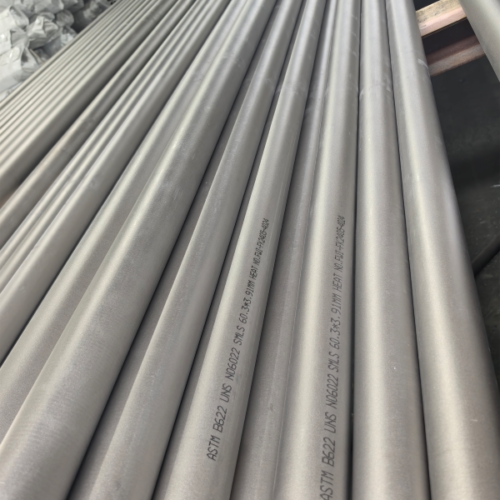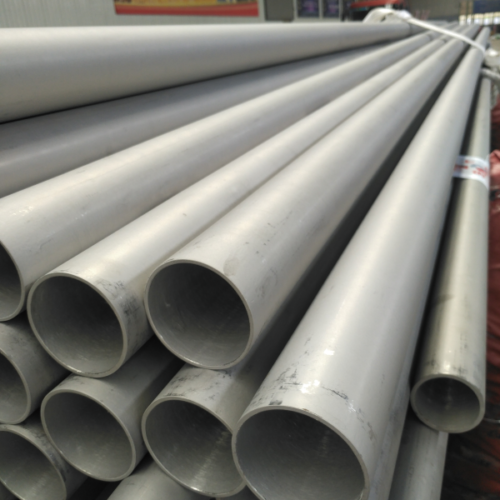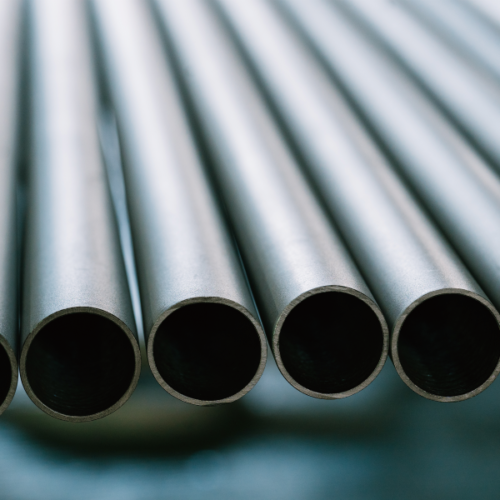

Seamless Hastelloy C276 Pipe – UNS N10276, ASTM B622 / ASME SB622
A seamless Hastelloy C276 pipe (UNS N10276 / W.Nr. 2.4819) is a nickel-molybdenum-chromium alloy pipe for aggressive chemical service. It is ordered by nominal pipe size and schedule — NPS 1/4 in. to NPS 3 in. in SCH 10, SCH 40 and SCH 80 — and is supplied to ASTM B622 / ASME SB622.
Wenzhou Xinzhe Tech Co., Ltd. is a China-based stockist and supplier of seamless stainless steel, duplex, super duplex and nickel alloy pipe and tube. Common C276 sizes are quoted from stock; other sizes are sourced mill-direct from qualified manufacturers against the specification you specify. Availability, length and finish are confirmed at quotation.
What to send for a C276 pipe quotation
- Size — nominal pipe size and schedule, or actual outside diameter and wall thickness
- Quantity — number of pieces or total length
- Length — random length, or cut-to-length with the tolerance you require
- End finish — plain ends or beveled ends
- Standard — ASTM B622 / ASME SB622, plus the edition if your project names one
- Documentation — EN 10204 3.1 MTC is standard; 3.2, hydrostatic, UT, ET, PMI and G48 must be requested
- Delivery — destination port, city or site
Use the Request a Quote button on this page, or send the list to our sales team. If the size is still open, tell us the medium, concentration and temperature and we will come back with both C276 and C22 options for your engineers to compare.
Product description
Seamless pipe is formed from a solid billet by hot extrusion and cold finishing, so there is no longitudinal weld seam. Compared with welded pipe of the same alloy, the absence of a weld seam removes one fabrication variable from the pressure and corrosion assessment — but the choice between seamless and welded supply should still be made against the applicable design code and the project specification, not on the alloy alone.
Hastelloy C276 is distinguished by its optimised composition of nickel (Ni), molybdenum (Mo), chromium (Cr) and tungsten (W). That chemistry gives useful resistance in both oxidising and reducing chemical environments, including:
- Ferric and cupric chlorides
- Contaminated organic and inorganic media
- Chlorine gas and chlorine compounds
- Formic and acetic acids
- Seawater and brine solutions
On this basis C276 seamless pipe is widely specified for chemical process piping, pollution control, offshore engineering and other high-corrosion industrial systems. The limits of that suitability are set out under “Where C276 is — and is not — the right choice” below.
Key features
Corrosion resistance
Hastelloy C276 is specified for its resistance to:
- Pitting corrosion
- Crevice corrosion
- Chloride-induced stress corrosion cracking (SCC)
Resistance depends on the medium, its concentration, the temperature and the presence of oxygen or other oxidisers — not on the alloy name alone. Published corrosion data for C-276 is measured under defined test conditions and should only be applied within those conditions.
Behaviour in oxidising media
C276 is one of the alloys routinely specified in strongly oxidising service such as:
- Wet chlorine gas
- Hypochlorite solutions
- Chlorine dioxide
Where oxidising conditions dominate, C22 is usually the better starting point because of its higher chromium content. See the grade comparison below.
Temperature — three different limits, not one
The single figure of “stable up to 816 °C” that circulates online mixes up three separate things. Keep them apart when you specify:
- Melting range (material property): 1323–1371 °C (2415–2500 °F) in the Haynes data sheet for this alloy; some other sources quote 1325–1370 °C. Either way it is a physical property of the alloy and is not a service or design limit.
- Design temperature (code limit): set by the design code applied to the equipment, for example ASME B31.3 or ASME BPVC Section VIII. The permitted design temperature for the finished component must be taken from that code and from the applicable ASME/ASTM specification — not from this page.
- Corrosion service temperature (application limit): depends on the medium, concentration and aeration. Published C-276 corrosion data is reported for defined test conditions and applies only to those conditions.
C276 is also used at low and cryogenic temperatures where the governing code permits it. Please state the design temperature and the governing code in your enquiry so the correct heat-treatment condition and documentation can be quoted.
Low carbon content and weldability
The low carbon content limits carbide precipitation during welding, which helps retain corrosion resistance in the heat-affected zone after fabrication. Whether post-weld heat treatment is required depends on the governing code and the service; it is not automatically required for every application.
Applicable standards
Seamless Hastelloy C276 pipe is supplied to:
- ASTM B622 / ASME SB622 — standard specification for seamless nickel and nickel-cobalt alloy pipe and tube. This is the specification applicable to the product on this page.
- ASTM B829 — general requirements for nickel and nickel alloy pipe and tube, referenced by B622.
Note on related standards. ASTM B619 / ASME SB619 cover welded nickel alloy pipe, and ASTM B626 covers welded nickel alloy tube. They are not the manufacturing specification for the seamless product shown here, and they are mentioned only so that buyers comparing welded and seamless supply are not misled. Welded and seamless products are ordered against different specifications, and a quotation will state which one applies.
These standards define requirements for chemical composition, mechanical properties, dimensional tolerances and inspection procedures. The edition executed is confirmed on the purchase order: the executed edition is stated on the purchase order, and earlier editions may still be quoted where a project specifies them.
Size Range: OD 6–457 mm · WT 0.6–35 mm
Product specifications and data
To give buyers a complete picture, the tabs below set out the composition limits, mechanical properties, physical properties and the sizes defined by ASTM B622 — together with what we normally supply. Acceptance limits and typical values are kept separate, and each table states its basis.
Equivalent Grade
| UNS | Common grade name | EN material number | EN steel name | JIS grade | GB/T grade |
|---|---|---|---|---|---|
| N10276 | Hastelloy C-276 | 2.4819 | NiMo16Cr15W | NW0276 | NS3304 / NS334 (legacy) |
Grade correspondence does not make ASTM, ASME, EN, JIS and GB delivery requirements interchangeable. Confirm chemistry, heat treatment, mechanical properties, dimensions, testing and certification against the purchase specification. See the grade designation index.
Chemical Composition
- The composition limits below are those of the base specification (ASTM B622 / ASME SB622) for UNS N10276. A heat is accepted or rejected against these limits; the values actually measured for your heat are recorded on the material test certificate.
| Ni | Cr | Mo | Fe | W | C | Si | Co | Mn | V | P | S |
|---|---|---|---|---|---|---|---|---|---|---|---|
| Bal | 14.50-16.50 | 15.00-17.00 | 4.00-7.00 | 3.00-4.50 | ≤0.01 | ≤0.08 | ≤2.50 | ≤1.00 | ≤0.35 | ≤0.04 | ≤0.03 |
Mechanical Properties — Specification Minimums
- How to read this table. The values shown are the minimum requirements of the base specification for solution-annealed material — they are acceptance limits, not a promise about any single heat. The values actually measured for the supplied batch are recorded on the material test certificate (MTC). Limits differ slightly between product forms and editions, so please confirm the governing specification and edition with your enquiry.
| Tensile strength | Yield strength, 0.2 % offset | Elongation in 2 in. (50.8 mm) | Hardness |
|---|---|---|---|
| ≥ 690 MPa (100 ksi) (Measured value on the MTC) | ≥ 283 MPa (41 ksi) (Measured value on the MTC) | ≥ 40 % (Measured value on the MTC) | Not specified as an acceptance limit for solution-annealed product (Measured value reported for information) |
Source: ASTM B622 / ASME SB622, mechanical property requirements for UNS N10276. Confirm the edition with your enquiry.
Physical Properties — Typical Values
- Physical properties are typical published values for the alloy at the temperature stated, not acceptance criteria, and they are not certified per batch. ASTM B622 does not specify physical properties. Where a project requires measured values at a defined temperature, please state this in the enquiry.
| Density | Melting range | Coefficient of thermal expansion | Thermal conductivity | Modulus of elasticity, dynamic | Electrical resistivity |
|---|---|---|---|---|---|
| 8.89 g/cm³ — at 20 °C (room temperature) | 1323–1371 °C (solidus to liquidus) | 11.2 µm/m·°C (mean, 24–100 °C) | 10.5–18.3 W/m·K (over 50–500 °C) | 205 GPa — at 20 °C (room temperature) | 1.23 µΩ·m — at 20 °C (room temperature) |
Basis: Haynes International data sheet
Source: Haynes International data sheet for HASTELLOY® C-276 alloy (UNS N10276). The figures are typical published properties given for engineering reference only: ASTM B622 does not specify physical properties, they are not acceptance criteria, and they are not certified per batch.
Electrical resistivity and thermal conductivity vs temperature
Both properties change with temperature, so a single figure is only valid at the temperature at which it was measured. The published series for C-276 is:
| Temperature | Electrical resistivity, µΩ·m | Thermal conductivity, W/m·K |
|---|---|---|
| 20 °C (room temperature) | 1.23 | — |
| 50 °C | — | 10.5 |
| 100 °C | 1.24 | 11.2 |
| 200 °C | 1.25 | 12.9 |
| 300 °C | 1.26 | 14.7 |
| 400 °C | 1.26 | 16.5 |
| 500 °C | 1.28 | 18.3 |
| 600 °C | 1.30 | — |
— = value not listed at that temperature in the source data. Interpolate between the points above for design work.
Size & Schedule (ASTM B622) + Typical Supply
- ASTM B622 / ASME SB622 — dimensional requirements
- This specification covers seamless nickel and nickel-cobalt alloy pipe and tube. For this page the relevant grade is Hastelloy C276, UNS N10276 (also written W.Nr. 2.4819).
- Tube is ordered by outside diameter, minimum or average wall thickness, and length.
- Pipe is ordered by nominal pipe size and schedule in accordance with Appendix X2 of the specification.
- The OD tolerance tables in this specification apply to tube. The figure of 3.5 in. (88.9 mm) that appears in some editions is the scope limit of those tolerance tables, not a limit on what can be supplied. Larger and smaller sizes can be quoted individually against an agreed specification.
Table X2.1 — Pipe Schedules (Inches)
| Nominal pipe size, in. | Outside diameter, in. | SCH 10 wall, in. | SCH 40 wall, in. | SCH 80 wall, in. |
|---|---|---|---|---|
| 1/4 | 0.540 | 0.065 | 0.088 | Not listed |
| 3/8 | 0.675 | 0.065 | 0.091 | 0.126 |
| 1/2 | 0.840 | 0.083 | 0.109 | 0.147 |
| 3/4 | 1.050 | 0.083 | 0.113 | 0.154 |
| 1 | 1.315 | 0.109 | 0.133 | 0.179 |
| 1 1/4 | 1.660 | 0.109 | 0.140 | 0.191 |
| 1 1/2 | 1.900 | 0.109 | 0.145 | 0.200 |
| 2 | 2.375 | 0.109 | 0.154 | 0.218 |
| 2 1/2 | 2.875 | 0.120 | 0.203 | 0.276 |
| 3 | 3.500 | 0.120 | 0.216 | 0.300 |
Table X2.1 — Pipe Schedules (Millimetres)
| Nominal pipe size, in. | Outside diameter, mm | SCH 10 wall, mm | SCH 40 wall, mm | SCH 80 wall, mm |
|---|---|---|---|---|
| 1/4 | 13.72 | 1.65 | 2.24 | Not listed |
| 3/8 | 17.14 | 1.65 | 2.31 | 3.20 |
| 1/2 | 21.34 | 2.11 | 2.77 | 3.73 |
| 3/4 | 26.67 | 2.11 | 2.87 | 3.91 |
| 1 | 33.40 | 2.77 | 3.38 | 4.55 |
| 1 1/4 | 42.16 | 2.77 | 3.56 | 4.85 |
| 1 1/2 | 48.26 | 2.77 | 3.68 | 5.08 |
| 2 | 60.32 | 2.77 | 3.91 | 5.54 |
| 2 1/2 | 73.02 | 3.05 | 5.16 | 7.04 |
| 3 | 88.90 | 3.05 | 5.49 | 7.62 |
Reproduced from ASTM B622 Appendix X2, which is non-mandatory information. Verify against the current edition of the standard before ordering.
Dimensional tolerances
ASTM B622 requires material to conform to the applicable general requirements of ASTM B829 unless otherwise provided. Permissible dimensional tolerances must therefore be verified against the current ASTM B829 edition and against the purchase order. ASTM A790 / A999 tolerances do not apply to this product — those specifications cover duplex stainless steel pipe and are sometimes quoted in error for nickel alloys.
Standard reference vs. what we normally supply
The tables above are reproduced from the standard. They describe the sizes defined by the specification — they are not a stock list, and the fact that a size appears in the standard does not mean it is held in stock. The table below states what we normally quote for C276 seamless pipe.
| Item | Typical range / status | How it is confirmed |
|---|---|---|
| Nominal pipe size | NPS 1/4 in. to NPS 3 in. (13.72–88.90 mm OD) | Confirmed at quotation |
| Schedule / wall thickness | SCH 10, SCH 40, SCH 80 as listed in Appendix X2 | Confirmed at quotation |
| Length | Random length or cut to a specified length | Agreed on the purchase order |
| End finish | Plain ends as standard; beveled ends on request | Agreed on the purchase order |
| Surface condition | Pickled and passivated, or bright annealed; ground finish on request | Agreed on the purchase order |
| Heat treatment | Solution annealed | Stated on the material test certificate |
| Documentation | EN 10204 3.1 MTC as standard; 3.2 / third-party witness on request | Requested at enquiry |
| Availability and price | Changes with mill schedules and stock | Confirmed at quotation |
Table last reviewed 23 September 2026. Ranges are indicative, describe what we normally quote, and are not a guarantee of stock. Confirm every item at quotation.
Common industrial applications
Because it withstands chlorides and mixed acids, seamless Hastelloy C276 pipe is specified across the following industries. Each entry lists the equipment involved, so you can see whether your duty is comparable.
Chemical Processing Industry
- Reactor vessels
- Digesters
- High-acid process piping
Pollution Control Systems
- Flue Gas Desulfurization (FGD) units
- Chemical scrubbers
- Stack liners
Pulp and Paper Industry
- Bleach plant equipment
- Chlorine dioxide processing systems
Waste Treatment and Environmental Systems
- Hazardous waste incineration equipment
- Evaporators and corrosive waste piping
Oil and Gas Industry
- Sour gas (H₂S) processing equipment
- Downhole tubing and subsea components
Quality control and inspection
Inspection scope is agreed on the purchase order. Items marked standard are included in a normal mill-direct order; everything else is available but must be specified at enquiry, because it affects price and lead time.
Included as standard
- Chemical composition and mechanical properties tested per heat at the mill
- EN 10204 3.1 material test certificate (MTC), issued by the manufacturer’s independent inspection department
- Dimensional and visual inspection to ASTM B829
- Marking and heat-number traceability on each piece
Available on request — specify at enquiry
- EN 10204 3.2 MTC with third-party witnessing
- Hydrostatic pressure testing
- Ultrasonic testing (UT) and eddy current testing (ET)
- Positive material identification (PMI)
- Pitting corrosion testing to ASTM G48
- Grain size determination
- Surface roughness measurement against a specified Ra value
- Certificates issued in a specified format, language or document pack
Traceability. Each piece is marked with the heat number, which links it to the test certificate for that heat. If your project requires a specific document pack — for example a witnessed 3.2 certificate, a corrosion test report or a full inspection release note — tell us at enquiry stage rather than after despatch.
Our sales team can provide anonymised examples of MTCs and inspection records for this grade on request, so that you can see the actual document format before you order. Please contact us and ask for the C276 document pack.
Hastelloy C276 or Hastelloy C22?
C276 and C22 are both nickel-chromium-molybdenum alloys, but they are not interchangeable in every duty. The short version:
| Hastelloy C276 (UNS N10276) | Hastelloy C22 (UNS N06022) | |
|---|---|---|
| Chromium | 14.5–16.5 % | 20.0–22.5 % |
| Molybdenum | 15.0–17.0 % | 12.5–14.5 % |
| Tungsten | 3.0–4.5 % | 2.5–3.5 % |
| Normally preferred in | Strongly reducing acids; chloride-bearing media where pitting and crevice corrosion govern | Strongly oxidising media such as wet chlorine, hypochlorite, chlorine dioxide and mixed oxidising acids |
| Relevant standard | ASTM B622 / ASME SB622 (seamless) | ASTM B622 / ASME SB622 (seamless) |
Composition ranges after the base specifications. “Normally preferred” is a generalisation only.
This is a starting point, not a selection decision. Whether C22 is an upgrade over C276 depends on the actual medium, its concentration, the temperature, aeration and the presence of chlorides or oxidisers — a combination that no comparison table can cover completely. Two alloys that look similar in a table can behave very differently in a specific process stream. Send us the medium, concentration, temperature and any existing corrosion data, and we will quote both grades so your engineering team can decide.
C276 seamless pipe and tube are supplied from this page. Hastelloy C22 seamless pipe and Hastelloy C22 seamless tube are quoted separately.
Applications and selection guidance
Where C276 is — and is not — the right choice
C276 seamless pipe is normally selected for:
- Chemical process piping handling acids, chlorides and mixed corrosive media
- Flue gas desulfurization (FGD) systems and chemical scrubbers
- Pulp and paper bleaching equipment
- Sour gas (H2S) and offshore systems
- Waste treatment and incineration plants
Where it is often not the right choice: strongly oxidising duties where C22 or another high-chromium alloy performs better; high-temperature duties above the permitted design temperature of the governing code; and services where a cheaper austenitic or duplex stainless steel already has adequate corrosion allowance. Please send the medium, concentration and temperature if you are still comparing materials.
Pipe or tube? If your enquiry is driven by nominal pipe size and schedule for a pipeline, this page is the right one. If you are ordering by outside diameter and wall thickness for heat exchangers, condensers or instrument lines, see Seamless Hastelloy C276 Tube.
Other nickel alloy seamless pipe grades:C22 · B2 · B3 · all Hastelloy alloy pipes
Purchasing FAQ — Hastelloy C276 seamless pipe
How do I order, and what information do you need?
Send the nominal pipe size and schedule (or actual OD and wall), quantity, length or cut-to-length tolerance, end finish, the standard you want the pipe supplied to, the documentation you require, and the delivery destination. If you have a purchase specification, attach it — it is faster than describing it. Submit through the Request a Quote button on this page and you will get a written quotation stating exactly which specification and edition the pipe will be supplied to.
What is the difference between ASTM B622 and ASTM B619?
They cover different products, not different alloys. ASTM B622 / ASME SB622 is the specification for seamless nickel and nickel-cobalt alloy pipe and tube. ASTM B619 / ASME SB619 is the specification for welded nickel alloy pipe. If you are buying seamless pipe, B622 is the applicable specification; B619 is only relevant if you are also comparing welded supply. A reputable quotation will state which one applies rather than listing both together.
What is the difference between seamless pipe and seamless tube?
They are ordered on different dimension systems. Pipe is ordered by nominal pipe size and schedule, so the outside diameter is fixed for a given NPS and the wall comes from the schedule — for example NPS 2 in. SCH 40. Tube is ordered by actual outside diameter and wall thickness, typically as OD × WT with a minimum or average wall convention. Pipe is normally used for pipelines and process lines; tube for heat exchangers, condensers and instrument lines. They are not interchangeable, and tolerances and ordering conventions differ.
Which sizes and schedules can you supply?
Our usual quotation range for C276 seamless pipe is NPS 1/4 in. to NPS 3 in. in SCH 10, SCH 40 and SCH 80, which is the range covered by Appendix X2 of ASTM B622. Common sizes are quoted from stock and the rest are sourced mill-direct. Sizes outside this table can often be quoted as well. Because stock and mill availability change, the definitive answer is given in the quotation — see the “Standard reference vs. what we normally supply” table on this page.
Which inspection documents come as standard?
As standard you receive an EN 10204 3.1 material test certificate (MTC) issued by the manufacturer’s independent inspection department, covering chemical composition and mechanical properties per heat, plus dimensional and visual inspection to ASTM B829. Heat number marking gives traceability from the piece back to the certificate.
Can you supply EN 10204 3.2 and third-party witnessed testing?
Yes. EN 10204 3.2 certificates, third-party witnessing, hydrostatic pressure testing, ultrasonic testing (UT), eddy current testing (ET), positive material identification (PMI), ASTM G48 pitting corrosion testing, grain size determination and surface roughness measurement are all available — but they must be requested at enquiry stage. They change the price, the lead time and sometimes the manufacturing route, so they cannot be added after despatched material has been produced. Tell us your document requirements in the enquiry and they will be quoted explicitly.
Which edition of ASTM B622 applies?
the executed edition is stated on the purchase order. The edition executed is confirmed on the purchase order: if your project specification was written against an earlier edition, say so and the quotation will be issued against that edition. Do not assume that a recent publication date on a supplier’s website means the current edition is being applied automatically.
Do you supply C22, B2 and B3 as well?
Yes. Hastelloy C22 seamless pipe, Hastelloy B2 seamless pipe and Hastelloy B3 seamless pipe are quoted separately. If you are still comparing grades, send the medium, concentration, temperature and any corrosion data and we will quote the suitable options side by side.
The answers above describe our normal commercial practice. Every supply is confirmed individually in the quotation — nothing on this page should be read as a standing commitment to stock, tolerance, test scope or lead time.
Ready to request a quotation?
Send us the sizes and quantities and we will come back with a written quotation stating the specification and edition, the delivery condition, the documentation included and the lead time.
Use the Request a Quote button on this page, or contact our sales team directly. If you need to build a multi-product enquiry, add each item to the enquiry list and submit them together.
Ready to Request a Quotation?
Send the NPS and schedule (or actual OD and wall), quantity, length, end finish and the inspection items you need as acceptance criteria — you will get a written quotation stating the specification and edition, delivery condition, documents included and lead time.