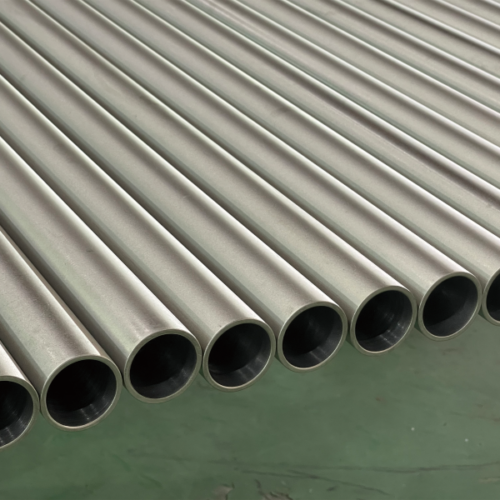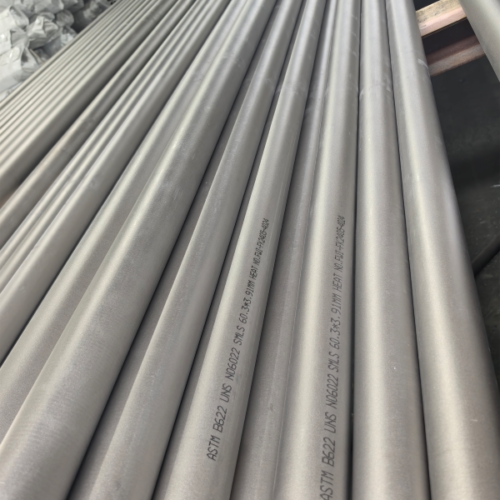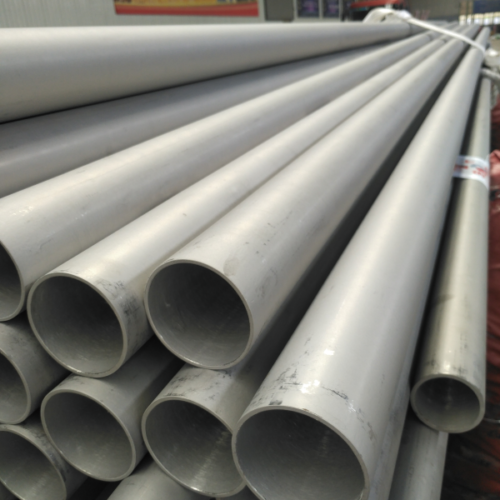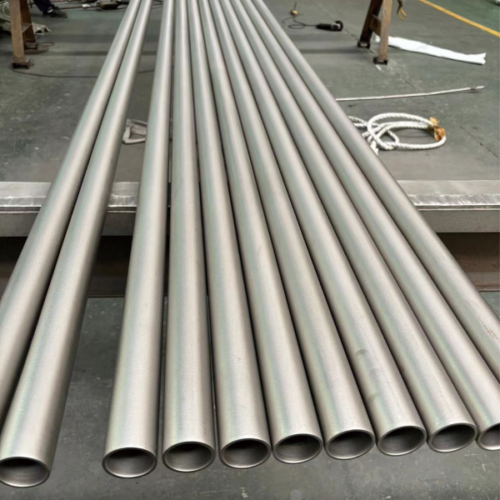

What Is a Seamless Hastelloy B2 Pipe?
Seamless Hastelloy B2 Pipe — UNS N10665 — is a high-performance nickel–molybdenum corrosion-resistant alloy specifically designed to withstand extremely reducing chemical environments. With its high molybdenum content and minimal chromium concentration, Hastelloy B2 offers exceptional resistance to hydrochloric acid and other non-oxidizing acids.
A Seamless Hastelloy B2 Pipe is manufactured from a solid billet using hot extrusion and precision cold drawing processes, eliminating welded seams that could become weak points in corrosive environments. This seamless construction ensures uniform metallurgical structure, consistent wall thickness, and enhanced mechanical reliability, making it ideal for high-pressure and high-vacuum chemical processing systems. Hastelloy B2 remains one of the most trusted materials for industries handling concentrated hydrochloric acid, sulfuric acid catalysts, and other reducing chemical media.
Engineered for Strong Reducing Environments
The performance of Hastelloy B2 is largely derived from its high molybdenum content (26–30%), which significantly improves resistance to hydrochloric acid corrosion across a wide range of concentrations and temperatures.
In seamless pipe form, the absence of weld seams provides additional protection against selective corrosion attack and metallurgical discontinuities, which can occur in welded structures under aggressive chemical conditions.
As a result, seamless Hastelloy B2 pipes are widely used in chemical reactors, acid handling pipelines, and critical process equipment.
Key Features and Technical Advantages
Exceptional Resistance to Hydrochloric Acid: Hastelloy B2 demonstrates outstanding corrosion resistance in boiling hydrochloric acid at nearly all concentrations, making it one of the most effective alloys for HCl service. It also performs well in other reducing acids, including:
- Phosphoric acid
- Sulfuric acid (in reducing conditions)
- Organic acids
Resistance to Chloride-Induced Stress Corrosion Cracking: The high nickel base of Hastelloy B2 provides excellent resistance to chloride-induced stress corrosion cracking (SCC), which commonly affects stainless steels in chloride environments.
Low Carbon Content for Enhanced Corrosion Resistance: The alloy’s low carbon composition minimizes carbide precipitation at grain boundaries, helping maintain corrosion resistance in heat-affected zones during welding.
Stable Mechanical Performance: Hastelloy B2 maintains reliable mechanical properties from cryogenic temperatures up to approximately 800°C in non-oxidizing environments, supporting its use in demanding chemical processes.
Compliance with International Standards: Seamless Hastelloy B2 pipes are typically produced according to:
- ASTM B622 – Seamless Nickel and Nickel-Cobalt Alloy Pipe and Tube
- ASTM B829 – General Requirements for Nickel Alloy Pipe and Tube
Product Specifications and Data
To provide a comprehensive overview of this high-performance material, here are the detailed technical specifications and performance data for Hastelloy B2 seamless pipe.
Equivalent Grade
| UNS | Common grade name | EN material number | EN steel name | JIS grade | GB/T grade |
|---|---|---|---|---|---|
| N10665 | Hastelloy B-2 | 2.4617 | NiMo28 | NW0665 | NS3202 / NS322 (legacy) |
Grade correspondence does not make ASTM, ASME, EN, JIS and GB delivery requirements interchangeable. Confirm chemistry, heat treatment, mechanical properties, dimensions, testing and certification against the purchase specification. See the grade designation index.
Chemical Composition
The balanced composition of nickel and molybdenum provides the alloy’s superior corrosion resistance in reducing media.
| Grade | Ni | Cr | Mo | Fe | C | Si | Co | Mn | P | S |
|---|---|---|---|---|---|---|---|---|---|---|
| UNS N10665 | Balance | ≤1.00 | 26.00-30.00 | ≤2.00 | ≤0.02 | ≤0.10 | ≤1.00 | ≤1.00 | ≤0.04 | ≤0.03 |
Chemical requirements per ASTM B622-23, Table 1 (UNS N10665). Single values are maximum content unless a range is indicated. Nickel is determined arithmetically by difference (balance).
Typical Mechanical Properties
Hastelloy B2 is specifically designed to maintain its strength and shape in high-stress, corrosive environments. Values below are specification minimums for the delivery condition.
| Condition | Tensile Strength, min | Yield Strength (0.2% Offset), min | Elongation, min |
|---|---|---|---|
| Solution annealed — ASTM B622-23 | ≥ 760 MPa | ≥ 350 MPa | ≥ 40% |
Mechanical properties per ASTM B622-23, Table 2, in the solution annealed condition. Hardness is not an acceptance limit in ASTM B622-23. Each pipe is hydrostatically or nondestructive electrically tested in accordance with the general requirements of ASTM B829.
Typical Physical Properties
These physical properties highlight the material’s ability to perform reliably under a wide range of conditions.
| Density | Melting Point | Thermal Expansion | Thermal Conductivity | Modulus of Elasticity | Electrical Resistivity |
|---|---|---|---|---|---|
| 9.22 g/cm³ | 1330-1380 °C | 10.3 μm/m·°C | 9.1 W/m·K | 217 GPa | 1.37 μΩ·m |
Size & Schedule Chart (ASTM B622)
ASTM B622-23 covers seamless nickel and nickel-cobalt alloy pipe and tube, including Hastelloy B2 (UNS N10665), up to and including 3.5 in. (88.9 mm) outside diameter. Tube orders specify outside diameter, minimum or average wall thickness and length; pipe orders use standard pipe size and schedule in accordance with Appendix X2.
Table X2.1 — Pipe Schedules (Inches)
| Nominal Pipe Size, in. | Outside Diameter, in. | Schedule 10 Wall, in. | Schedule 40 Wall, in. | Schedule 80 Wall, in. |
|---|---|---|---|---|
| 1/4 | 0.540 | 0.065 | 0.088 | Not listed |
| 3/8 | 0.675 | 0.065 | 0.091 | 0.126 |
| 1/2 | 0.840 | 0.083 | 0.109 | 0.147 |
| 3/4 | 1.050 | 0.083 | 0.113 | 0.154 |
| 1 | 1.315 | 0.109 | 0.133 | 0.179 |
| 1 1/4 | 1.660 | 0.109 | 0.140 | 0.191 |
| 1 1/2 | 1.900 | 0.109 | 0.145 | 0.200 |
| 2 | 2.375 | 0.109 | 0.154 | 0.218 |
| 2 1/2 | 2.875 | 0.120 | 0.203 | 0.276 |
| 3 | 3.500 | 0.120 | 0.216 | 0.300 |
Table X2.1 — Pipe Schedules (Millimetres)
| Nominal Pipe Size, in. | Outside Diameter, mm | Schedule 10 Wall, mm | Schedule 40 Wall, mm | Schedule 80 Wall, mm |
|---|---|---|---|---|
| 1/4 | 13.72 | 1.65 | 2.24 | Not listed |
| 3/8 | 17.14 | 1.65 | 2.31 | 3.20 |
| 1/2 | 21.34 | 2.11 | 2.77 | 3.73 |
| 3/4 | 26.67 | 2.11 | 2.87 | 3.91 |
| 1 | 33.40 | 2.77 | 3.38 | 4.55 |
| 1 1/4 | 42.16 | 2.77 | 3.56 | 4.85 |
| 1 1/2 | 48.26 | 2.77 | 3.68 | 5.08 |
| 2 | 60.32 | 2.77 | 3.91 | 5.54 |
| 2 1/2 | 73.02 | 3.05 | 5.16 | 7.04 |
| 3 | 88.90 | 3.05 | 5.49 | 7.62 |
Dimensional Tolerances
ASTM B622-23 requires material to conform to the applicable general requirements of ASTM B829 unless otherwise provided. Permissible dimensional tolerances must therefore be verified against the current ASTM B829 edition and the purchase order; ASTM A790/A999 tolerances do not apply to this nickel-alloy product; those specifications cover duplex stainless steel pipe.
Note: Appendix X2 is nonmandatory information. The listed pipe schedules are regularly available and conform to standards adopted by the American National Standards Institute.
Common Industrial Applications
Due to its exceptional resistance to reducing acids, Hastelloy B2 pipes are widely used in industries requiring high corrosion resistance and process reliability.
Chemical Processing
Common applications include equipment used in the production of:
- Plasticizers
- Magnesium chloride
- Organic acids
- Agricultural chemicals
Petrochemical Processing
Hastelloy B2 pipes are used in:
- Catalytic alkylation units
- Isomerization processes
- Acid-resistant process piping
Pharmaceutical Industry
The alloy is suitable for high-purity reactors and chemical processing equipment where aggressive reducing reagents are used.
Vacuum and Distillation Systems
Seamless Hastelloy B2 pipes are also applied in:
- Vacuum distillation columns
- Acid-resistant heat exchangers
- Chemical processing pipelines operating under reduced pressure conditions
Quality Assurance and Traceability
Every Seamless Hastelloy B2 Pipe is manufactured under strict quality management procedures to ensure full compliance with international industrial standards.
Material Verification
- 100% PMI (Positive Material Identification) to confirm chemical composition.
Non-Destructive Testing
- Ultrasonic Testing (UT)
- Hydrostatic pressure testing
- Eddy Current Testing (ET)
Certification and Documentation
Complete documentation ensures full traceability, including:
- EN 10204 3.1 / 3.2 Material Test Certificates
- Third-party inspection reports from SGS, ABS, or Lloyd’s Register
- Intergranular Corrosion (IGC) testing reports
Important Technical Considerations for Hastelloy B2
Although Hastelloy B2 performs exceptionally well in reducing environments, several conditions must be carefully controlled to ensure long-term performance.
Avoid Oxidizing Contaminants
Hastelloy B2 has limited resistance to oxidizing media. The presence of oxidizing ions such as:
- Ferric ions (Fe³⁺)
- Cupric ions (Cu²⁺)
- Nitrates
can significantly accelerate corrosion.
Recommended solution: if oxidizing impurities are present in the process stream, alloys such as Hastelloy C276 or Hastelloy B3 may be more suitable.
Intermediate Temperature Sensitivity
Hastelloy B2 can experience embrittlement when exposed to temperatures between 600°C and 800°C, where brittle intermetallic phases may form.
Best practice: strict control of welding parameters, rapid cooling after thermal exposure, and use of qualified welding procedures.
Limitations in Oxidizing Environments
Although B2 is highly resistant to chloride-induced SCC, it should not be used in strong oxidizing environments, such as:
- Nitric acid service
- Wet chlorine gas exposure
In these conditions, corrosion rates may increase significantly.
Ready to Request a Quotation?
Send the NPS and schedule (or actual OD and wall), quantity, length, end finish and the inspection items you need as acceptance criteria — you will get a written quotation stating the specification and edition, delivery condition, documents included and lead time.