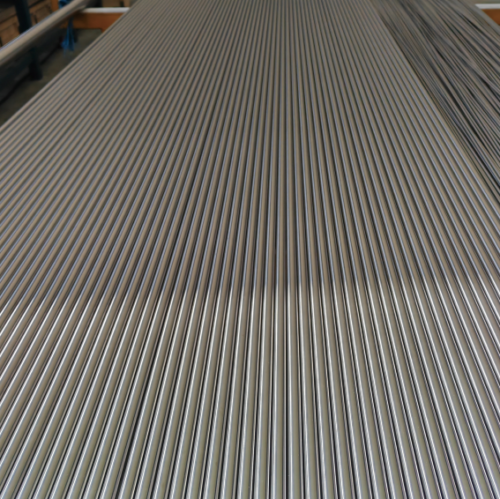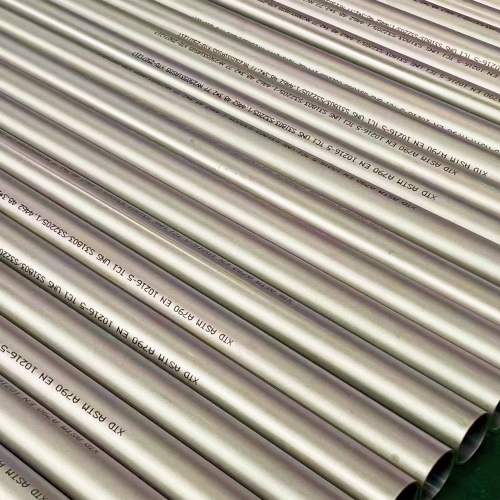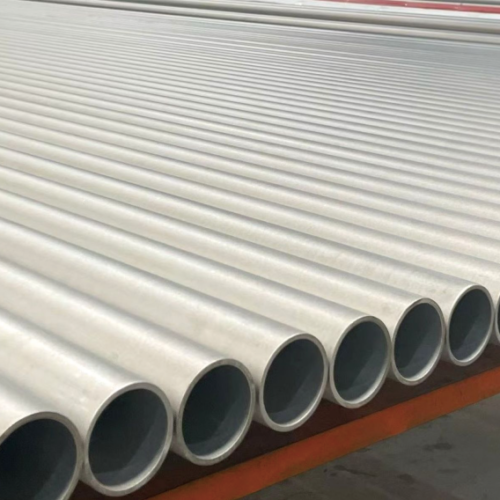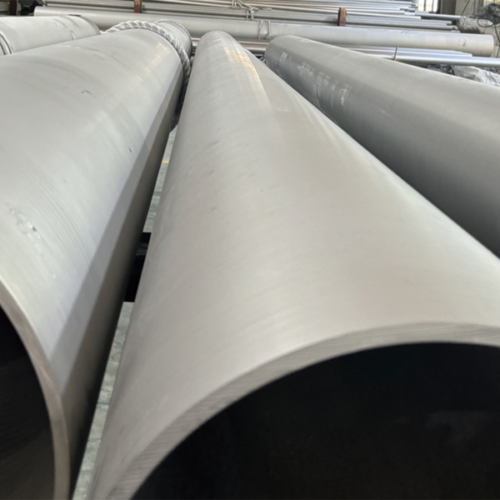
UNS S32205 Duplex 2205 Seamless Pipe Overview
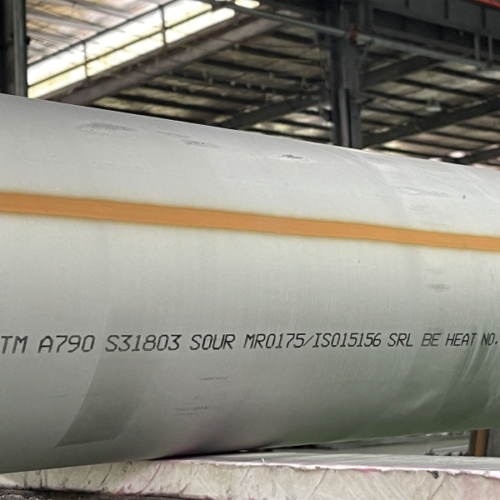
A Seamless Duplex Stainless Steel Pipe UNS S32205 (Duplex 2205 family, W.Nr. 1.4462) is a nitrogen-alloyed ferritic–austenitic steel supplied to ASTM A790 / ASME SA790, the product specification for seamless and welded ferritic/austenitic pressure pipe, with the general requirements of ASTM A999 / ASME SA999 applied through it. Pipe is ordered by NPS and schedule (or actual OD and wall) to ASME B36.10M.
The “duplex” name refers to the roughly 50/50 ferrite–austenite structure, which is where the grade’s high yield strength and its resistance to chloride stress corrosion cracking come from. S32205 is the tighter-composition designation of the 2205 family; how it differs from UNS S31803 is set out in the grade comparison below, with the numbers from the standards themselves.
Ordering the other form? UNS S32205 seamless tube (ASTM A789) is on the same standards family. Also available: the UNS S31803 seamless pipe page.
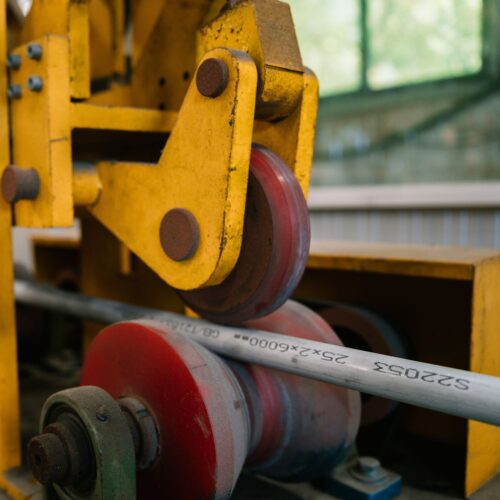
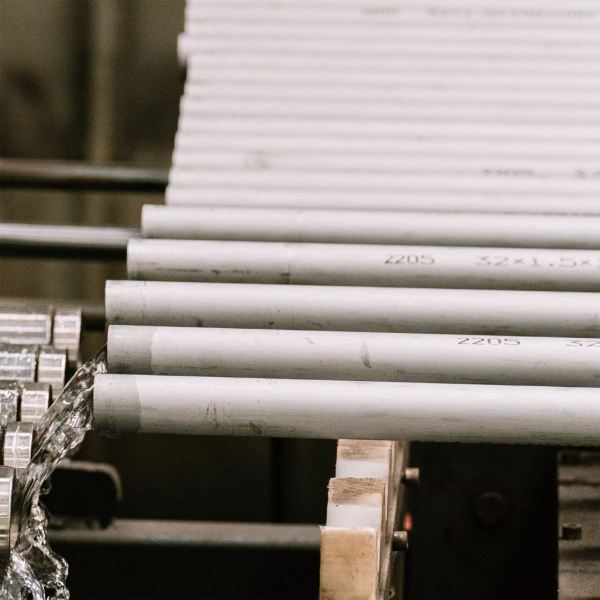
We supply this product as a China-based stockist and supplier: common sizes are quoted from stock, the balance is sourced mill-direct from qualified producers, and the material test certificate is issued for the heat actually supplied. Availability, condition and price are confirmed at quotation rather than published as a fixed list. Every supply can be evidenced before you order — ask for a redacted MTC of a comparable delivery and photographs of the material offered.
Key Features of UNS S32205 Duplex 2205 Seamless Pipe
High yield strength
A790 Table 3 requires a minimum yield strength of 450 MPa for S32205 — roughly twice that of 316L — with a minimum tensile of 655 MPa and 25 % elongation. Thinner-wall designs are possible only where the applicable design code and calculation allow them.
Resistance to chloride stress corrosion cracking
The duplex structure gives markedly better chloride-SCC resistance than austenitic grades — the property A790 highlights when it says the alloy is intended for general corrosive service with particular emphasis on SCC resistance.
PREN — calculated per heat, not a grade guarantee
Pitting resistance is often quoted through the Pitting Resistance Equivalent Number: PREN = %Cr + 3.3 × %Mo + 16 × %N (weight %). The formula only means something when it is fed with the ladle analysis of the actual heat — which is why the material test certificate matters:
- ASTM A790 / A789 set no PREN minimum for S32205 or S31803. (PREN floors in the standard’s table footnotes apply to some super duplex grades, not to the 2205 family.)
- Computed from the minimum composition allowed for S32205, PREN = 22.0 + 3.3 × 3.0 + 16 × 0.14 ≈ 34.1. For S31803 the same calculation gives about 30.5.
- A heat at the middle of the S32205 window (Cr 22.5, Mo 3.2, N 0.17) computes to about 35.8 — so “PREN ≈ 35” describes typical heats, not a floor that every heat automatically meets.
- If your project needs PREN ≥ 35 as an acceptance criterion, say so at enquiry. We will state it in the offer and report the ladle-analysis PREN on the certificate for the heat actually supplied.
Calculation shown so the number can be checked against the MTC. PREN is a screening index for comparing alloys — it is not a corrosion rate, a critical temperature or a service-life prediction.
Temperature behaviour — separate the three things “max temperature” gets mixed up with
- Prolonged exposure above about 280 °C. Duplex 2205-type microstructures change on long exposure at elevated temperature and impact strength falls. The producer datasheet (Alleima SAF™ 2205) advises contacting the producer before continuous service above this level. The classic 475 °C embrittlement sits above it.
- Design-code allowables. Published ASME B31.3 design stresses for UNS S31803/S32205 run from 207 MPa at 38 °C to about 185 MPa at 316 °C (Alleima SAF™ 2205 datasheet, ASME B31.3 table). The value is temperature-specific: the ~185 MPa figure is the allowable at 316 °C, not a general value “near 300 °C”. Your allowable stress must come from the code edition you build to.
- Low-temperature toughness. Producer data show good Charpy-V impact energy down to about −50 °C for solution-annealed material — but an impact requirement is not automatic. If you need it, specify the test temperature, specimen orientation and acceptance energy at enquiry.
- Corrosion-limited service. In aqueous chloride duty the medium, temperature, chloride level, crevices and flow decide the operating window — usually well below any strength-based limit. Seawater and H₂S service need case-by-case assessment (see the applications note below).
Sources: Alleima SAF™ 2205 datasheet (UNS S31803/S32205) for the temperature notes and B31.3 stress figures; ASTM A790/A789 for the mechanical requirements. None of these numbers is a blanket service guarantee.
Product Specifications and Data
Here are the detailed technical specifications and performance data for S32205 Duplex Stainless Steel.
Equivalent Grade
| UNS | Common grade name | EN material number | EN steel name | JIS grade | GB/T grade |
|---|---|---|---|---|---|
| S32205 | 2205 / Duplex 2205 | 1.4462 | X2CrNiMoN22-5-3 | SUS329J3L | 022Cr23Ni5Mo3N |
Grade correspondence does not make ASTM, ASME, EN, JIS and GB delivery requirements interchangeable. Confirm chemistry, heat treatment, mechanical properties, dimensions, testing and certification against the purchase specification. See the grade designation index.
Chemical Composition — ASTM A790 Table 2
The composition limits below are the acceptance limits of ASTM A790 Table 2, verified on the ladle (heat) analysis. They are not typical values and not our guarantee band — the actual analysis of the heat you receive is reported on the MTC, and product analysis tolerances follow ASTM A480/A480M. The same limits appear in ASTM A789 under Table 1, which is how the tube pages cite them.
| UNS designation | C | Mn | P | S | Si | Ni | Cr | Mo | N | Fe |
|---|---|---|---|---|---|---|---|---|---|---|
| UNS S32205 | ≤ 0.030 | ≤ 2.00 | ≤ 0.030 | ≤ 0.020 | ≤ 1.00 | 4.50–6.50 | 22.0–23.0 | 3.00–3.50 | 0.14–0.20 | balance |
| UNS S31803 | ≤ 0.030 | ≤ 2.00 | ≤ 0.030 | ≤ 0.020 | ≤ 1.00 | 4.50–6.50 | 21.0–23.0 | 2.50–3.50 | 0.08–0.20 | balance |
Ladle analysis limits in weight % from ASTM A790 Table 2 (maxima unless a range is given); the same limits appear in the other product specification under a different table number. Iron is the balance of the analysis, not a specified limit. Copper and other elements are not specified for these two grades. These are acceptance limits verified on the heat analysis; product analysis tolerances are those of ASTM A480/A480M. The actual analysis of your heat is reported on the material test certificate.
Mechanical Properties — ASTM A790 Table 3
S32205’s dual-phase structure provides a significant increase in yield strength compared to standard austenitic grades.
| Tensile strength, min | Yield strength, min | Elongation in 2 in. / 50 mm, min | Hardness, max |
|---|---|---|---|
| 655 MPa (95 ksi) | 450 MPa (65 ksi) | 25 % | 290 HBW / 30 HRC |
Basis: ASTM A790 Table 3
These are the acceptance minima of the standard, tested per lot on specimens from the heat. Typical mill results run well above them; the measured values for your lot are reported on the certificate. Hardness is a maximum requirement of the standard, not a typical value. Note the S32205 yield figure: A790 Table 3 keeps the minimum at 65 ksi (450 MPa), the same as S31803 — it is A789 Table 4 for tube that raises S32205 to 70 ksi (485 MPa). Do not quote the tube figure on a pipe order.
Physical Properties
These physical properties highlight the material’s ability to perform reliably under a wide range of conditions.
| Density | Specific heat capacity | Thermal conductivity | Thermal expansion, mean | Modulus of elasticity | Electrical resistivity |
|---|---|---|---|---|---|
| 7.8 g/cm³ (at 20 °C) | 480 J/(kg·°C) (at 20 °C) | 14 → 20 W/(m·°C) (20 → 400 °C) | 13.0 → 14.5 ×10⁻⁶/°C (30–100 → 30–400 °C) | 200 → 180 GPa (20 → 300 °C) | 0.74 µΩ·m (at 20 °C) |
Typical values for the UNS S31803/S32205 (Duplex 2205) family, quoted from the Alleima SAF™ 2205 datasheet, which covers both designations. They describe the alloy family, not the acceptance criteria of your order — physical properties are not tested per lot unless you ask.
Dimensions, Masses and Tolerances
Outside diameter tolerance — ASTM A999/A999M, applied through ASTM A790
| NPS designator | Over nominal OD | Under nominal OD |
|---|---|---|
| 1/8 to 1½, incl. | +1/64 in. (0.4 mm) | −1/32 in. (0.8 mm) |
| Over 1½ to 4, incl. | +1/32 in. (0.8 mm) | −1/32 in. (0.8 mm) |
| Over 4 to 8, incl. | +1/16 in. (1.6 mm) | −1/32 in. (0.8 mm) |
| Over 8 to 18, incl. | +3/32 in. (2.4 mm) | −1/32 in. (0.8 mm) |
| Over 18 to 26, incl. | +1/8 in. (3.2 mm) | −1/32 in. (0.8 mm) |
| Over 26 to 34, incl. | +5/32 in. (4.0 mm) | −1/32 in. (0.8 mm) |
| Over 34 to 48, incl. | +3/16 in. (4.8 mm) | −1/32 in. (0.8 mm) |
Wall thickness tolerance
Minimum wall: at any point, not more than 12.5 % under the nominal wall thickness specified.
Maximum wall (over nominal), by size and t/D ratio:
| NPS designator | t/D ratio | Permissible excess over nominal wall |
|---|---|---|
| 1/8 to 2, incl. | all ratios | +20.0 % |
| 3 to 18, incl. | t/D ≤ 5 % | +22.5 % |
| 3 to 18, incl. | t/D > 5 % | +15.0 % |
| 20 and larger, seamless | t/D ≤ 5 % | +22.5 % |
| 20 and larger, seamless | t/D > 5 % | +15.0 % |
Lengths: random lengths as normally supplied; pipe ordered to specific cut lengths is held to +1/8 in. (about 3 mm), −0. Pipe dimensions follow ASME B36.10M for the schedule ordered.
Tolerances per ASTM A999/A999M, the general requirements specification referenced by ASTM A790 (§ General Requirements). Inch dimensions are the standard units; metric values are equivalents shown for convenience. Always work from the current edition of the standards for acceptance.
What the certificates show — indicative delivered values
These figures are not a specification. They are indicative ranges seen on EN 10204 3.1 material test certificates issued by the producing mill for S32205 heats, normally passed on to the purchaser by us as the supplier. They show how far ordinary production heats sit above the minimum requirements. The 3.1 certificate is issued and signed by the manufacturer’s authorised inspection representative; where a 3.2 certificate is required, it is issued by an independent inspection body and is arranged at enquiry. The certificate for your order states the analysis and test results of the heat and size you actually receive.
| Heat analysis (weight %) | Typical delivered range | Specified limit | Basis |
|---|---|---|---|
| C | 0.021 – 0.022 | ≤ 0.030 | ASTM A790 Table 2 |
| Si | 0.69 – 0.75 | ≤ 1.00 | ASTM A790 Table 2 |
| Mn | 1.05 – 1.11 | ≤ 2.00 | ASTM A790 Table 2 |
| P | 0.021 – 0.022 | ≤ 0.030 | ASTM A790 Table 2 |
| S | 0.001 | ≤ 0.020 | ASTM A790 Table 2 |
| Cr | 22.6 – 22.7 | 22.0 – 23.0 | ASTM A790 Table 2 |
| Ni | 4.82 – 4.85 | 4.50 – 6.50 | ASTM A790 Table 2 |
| Mo | 3.35 – 3.38 | 3.00 – 3.50 | ASTM A790 Table 2 |
| N | 0.17 – 0.18 | 0.14 – 0.20 | ASTM A790 Table 2 |
| Fe | balance | balance | ASTM A790 Table 2 |
| Property | Typical delivered range | Minimum requirement | Basis |
|---|---|---|---|
| Tensile strength | 675 – 685 MPa | 655 MPa | ASTM A790 Table 3 |
| Yield strength, 0.2 % offset | 480 – 510 MPa | 450 MPa | ASTM A790 Table 3 |
| Elongation in 50 mm | 28 – 29 % | 25 % | ASTM A790 Table 3 |
| PREN from the heat analysis | 36.5 – 36.6 | no minimum in the standard | calculated |
| Ferrite content | recorded where the order requires it, typically 40 – 60 % | per order | certificate |
Condition recorded on the same certificates: solution annealed at 1050 °C and water quenched, then delivered annealed, pickled and passivated — inside the heat-treatment range the standard sets for this grade.
Test coverage recorded on those certificates: heat analysis, tensile, ferrite content, flattening, hydrostatic test, eddy-current test and dimensional and visual examination, each entered as pass. An item absent from a certificate was either not required by the standard for that order or not added as an optional acceptance criterion — it cannot be inferred that the material failed it. A redacted copy of a comparable certificate, with purchaser details removed, can be sent before you order. The ranges above describe production experience, not an acceptance criterion — what you can enforce is the standard plus whatever is written into your order.
Applications of UNS S32205 Duplex 2205 Seamless Pipe
Duplex 2205-family pipe is a candidate material in offshore and onshore oil and gas piping, chemical and petrochemical process lines, desalination high-pressure lines, pulp and paper digesters and bleach-wash areas, and pollution-control scrubbers. What the listing cannot decide is suitability for your medium — see the note below.
Oil and Gas Industry
- Subsea flowlines
- Offshore manifolds
- Sour gas (H₂S) processing systems
Chemical Processing
- Heat exchanger piping
- Pressure vessels
- Process piping handling acidic and chloride-rich chemicals
Desalination and Marine Engineering
- Reverse osmosis (RO) high-pressure pipelines
- Seawater cooling systems
- Marine structural piping
Pulp and Paper Industry
- Digesters
- Bleach washers
- Black liquor storage tanks
Environmental and Pollution Control
- Flue Gas Desulfurization (FGD) systems
- Industrial scrubbers and effluent treatment equipment
Inspection and testing — what the standard requires and what is ordered separately
Lists that read “every product undergoes everything” hide the two questions a buyer actually has: what am I paying for by default, and what must I specify as an acceptance criterion. The matrix answers both:
| Item | Basis | Frequency / extent | Status | Reported as |
|---|---|---|---|---|
| Ladle (heat) analysis | ASTM A790 Table 2 limits | Per heat | Standard | EN 10204 3.1 MTC |
| Tension test, room temperature | ASTM A790 Table 3, sampled per ASTM A999/A999M | Per lot | Standard | 3.1 MTC |
| Hardness test | ASTM A790 Table 3: ≤ 290 HBW / 30 HRC | Per lot | Standard | 3.1 MTC |
| Hydrostatic test or non-destructive electric test | ASTM A790 | Each pipe — one of the two, as agreed on the order | Standard | Test record on the MTC |
| Dimensional and visual examination | ASTM A999/A999M tolerances | Each length | Standard | 3.1 MTC |
| Impact test (Charpy V) | Not in ASTM A790 | Specify test temperature and acceptance energy | Optional — agree at enquiry | Test report |
| Positive material identification (PMI) | Not in ASTM A790 | Per piece or sampled — state which | Optional | PMI report |
| Intergranular corrosion test | ASTM G28 Method A or B, as specified (test method for Ni-base and high-alloy stainless, not the duplex-specific route) | Per lot | Optional — agree method and acceptance criterion at enquiry | Test report |
| Pitting / crevice corrosion test | ASTM G48 Method A or B | Per lot | Optional — agree method and acceptance criterion at enquiry | Test report |
| Intermetallic phase (sigma) test | ASTM A923 (Methods A/B/C — the duplex-specific route) | Per lot | Optional — agree method and acceptance criterion at enquiry | Test report |
| Third-party inspection or witnessing | The agency’s own scope | As agreed | Optional — carried out and reported by the agency, not by us | Agency report; EN 10204 3.2 where required |
Frequency and lot definitions follow ASTM A999/A999M as referenced by ASTM A790. Tell us at enquiry which optional items are acceptance criteria for your project — they usually cannot be added after the material is produced.
Documents, traceability and delivery
- Material test certificate. EN 10204 3.1 as standard, issued for the heat actually supplied and stating grade, heat number, chemical analysis, tensile results, dimensions, condition and the tests performed.
- 3.2 certificate and witnessed inspection. On request. These are performed and signed by the third-party agency — nominated by you or proposed by us — and are not a certificate issued by our company.
- Traceability. Heat number is marked on each length and carried onto the MTC, so a piece can be traced back to its heat. Inspection records held by the mill for your order can be passed on where you need them.
- Marking and packing. Grade, size, standard and heat number stencilled or tagged; ends protected; packed for sea freight. Special marking, tagging or packing against your specification on request.
- Documents and photographs before you order. On request we can send a redacted MTC for a comparable order, dimensional inspection records, and photographs of the actual material being offered, so the paperwork can be checked before the order is placed.
Duplex 2205 vs 316L — where the comparison actually holds
| Property | Duplex 2205 (UNS S32205) | 316L (UNS S31603) | Basis / note |
|---|---|---|---|
| Yield strength, min | 450 MPa (solution-annealed pipe, A790 Table 3) | about 170–190 MPa (300-series austenitic pipe, typical published minimums; not the same product standard or condition) | Product standards differ — compare like for like, e.g. ASTM A312 TP316L |
| Tensile strength, min | 655 MPa | about 485 MPa | ASTM A312 TP316L vs A790 S32205; product standards differ |
| PREN (typical heat) | about 34–36 | about 24 | calculated from ladle analysis; not a guarantee |
| Chloride SCC resistance | markedly better | limited | general materials-engineering comparison |
| Upper service temperature | needs case review above ~280 °C (prolonged exposure) | higher temperature capability in code tables | see temperature section above |
The strength and chloride-SCC differences are what justify duplex selection; “cheaper lifecycle through thinner walls” only follows where the design calculation, fabrication practice and corrosion assessment all agree.
UNS S32205 seamless pipe — specification summary
Seamless duplex stainless steel pipe in UNS S32205 (Duplex 2205 family, EN 1.4462) to ASTM A790 / ASME SA790, with the general requirements of ASTM A999/SA999, supplied as a China-based stockist and supplier.
| Material | UNS S32205 / Duplex 2205 family / W.Nr. 1.4462 |
|---|---|
| Product standard | ASTM A790 / ASME SA790 (general requirements: ASTM A999/SA999) |
| Ordered by | NPS and schedule, or actual OD and wall (ASME B36.10M) |
| Tensile requirement (RT) | ≥655 MPa tensile, ≥450 MPa yield, ≥25% elongation, ≤290 HBW (A790 Table 3) |
| Condition | Solution annealed and pickled (or bright annealed), per A790 |
| PREN | Calculated per heat from the ladle analysis; standard sets no minimum |
| Documentation | EN 10204 3.1 MTC standard; 3.2 / witnessed inspection on request |
| Availability | Confirmed at quotation; price on request |
UNS S32205 seamless pipe — purchasing FAQ
What sizes can you actually supply?
Pipe is ordered by NPS and schedule to ASME B36.10M (or actual OD and wall). We quote from stock where the size is held and source mill-direct otherwise; the specific size/schedule combination, MOQ and lead time are stated in the quotation rather than promised on the page.
How is PREN confirmed for my order?
PREN = %Cr + 3.3 × %Mo + 16 × %N computed from the ladle analysis on the MTC. For S32205 the standard sets no PREN floor; the minimum allowed composition computes to about 34.1 and typical heats about 35. If you need PREN ≥ 35 as an acceptance criterion, we state it in the offer and report it per heat.
Which tests are standard and which are optional?
Standard: ladle analysis, tension and hardness per A790 Table 3, hydrostatic or non-destructive electric test on each pipe, dimensional and visual examination. Optional (must be specified at enquiry): Charpy impact, PMI, IGC, G48, 3.2 certificate and witnessed inspection.
Can material certified S32205 be used where S31803 is specified?
Only with the designer’s approval. Where a heat meets every requirement of both grades it can be dual certified, and the MTC must state which certifications apply. See the grade comparison section above.
Is this pipe suitable for seawater or H2S service?
Those are assessment questions, not grade properties: seawater duty depends on temperature, chlorides, crevices and flow; H2S service is governed by NACE MR0175/ISO 15156 environmental limits for 22Cr duplex. Send the service conditions and we will review them with the mill data.
Ready to Request a Quotation?
Send the NPS and schedule (or actual OD and wall), quantity, length, end finish and the inspection items you need as acceptance criteria — you will get a written quotation stating the specification and edition, delivery condition, documents included and lead time.