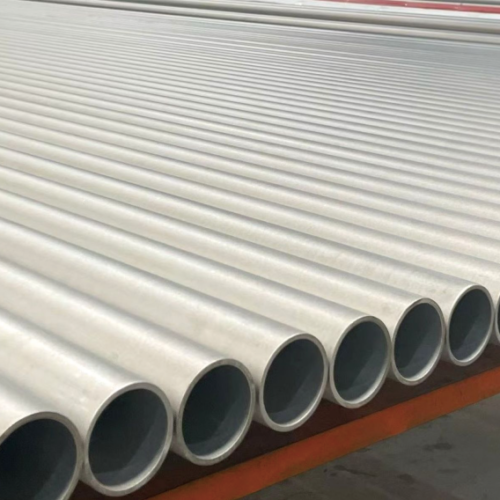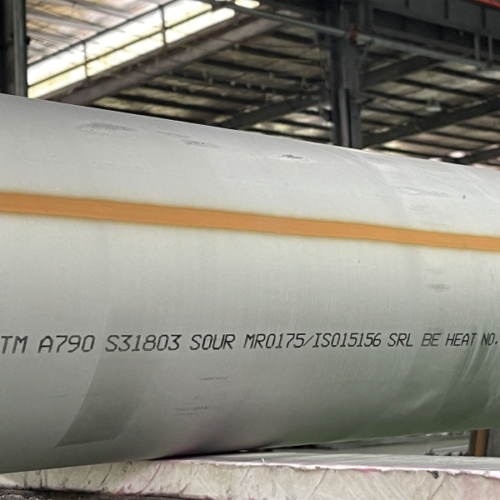
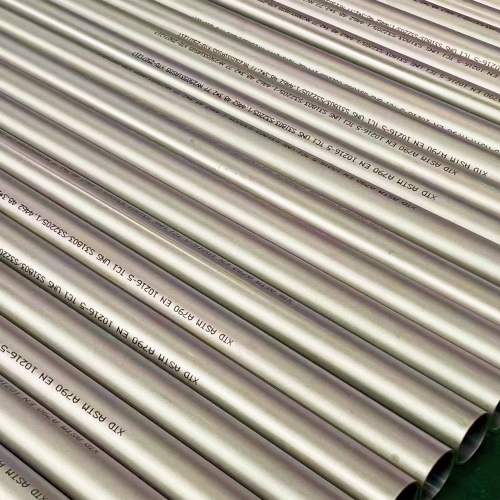
What Is a Seamless Duplex Steel S31803 Tube?
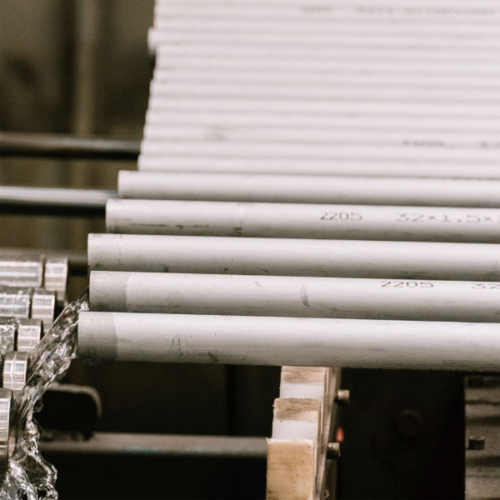
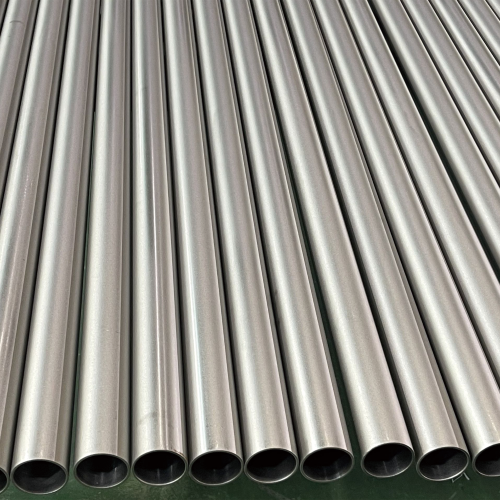
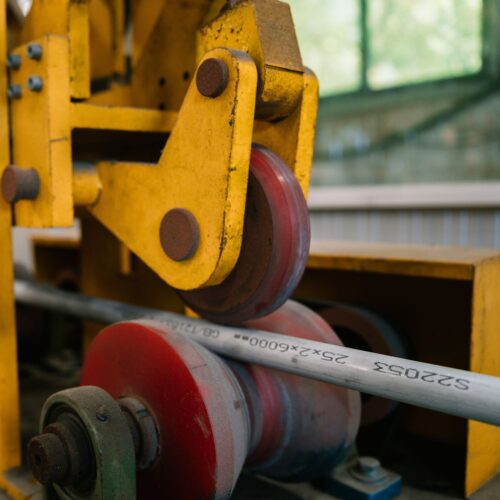
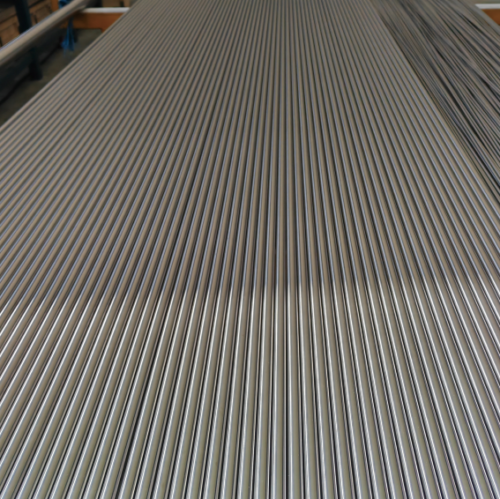
Seamless Duplex Steel S31803 Tube is a nitrogen-alloyed duplex (ferritic/austenitic) stainless steel tube — the base grade of the Duplex 2205 family — produced to ASTM A789 from a solid billet with no weld seam.
The“S31803”(UNS S31803) designation covers a balanced 22Cr-5Ni-3Mo-N chemistry. The nitrogen addition stabilizes the austenite and boosts pitting resistance, giving a PREN of about 30.5 at the minimum composition and around 33–35 for typical heats (PREN = %Cr + 3.3 × %Mo + 16 × %N, calculated from the ladle analysis). ASTM A789 sets no PREN minimum for S31803. Compared with 316L tube, S31803 offers about double the yield strength and markedly better chloride stress corrosion cracking resistance; thinner-wall, higher-pressure designs are possible only where the design code and the actual medium, temperature and chloride content allow them.
Key Features and Advantages
Seamless UNS S31803 tube offers a combination of properties that standard austenitic grades struggle to match, which is why duplex tubes are widely specified for aggressive service:
Roughly Double the Yield Strength: a 450 MPa minimum yield strength (ASTM A789/A789M-24, Table 4) is roughly double that of austenitic 304/316 tube. Thinner walls and higher allowable pressures are possible only where the applicable design code and calculation permit them for the actual size, temperature and service.
Chloride Stress Corrosion Cracking Resistance: the duplex structure outperforms 316L dramatically in hot chloride environments — the classic failure mode of austenitic tube.
Pitting and Crevice Corrosion Resistance: molybdenum plus nitrogen give a PREN well above 316L (about 30.5 at the S31803 minimum composition; higher for typical heats) for brackish and chloride-bearing service. PREN is a screening index for comparing alloys — not a corrosion rate or a service-life prediction.
Good General Corrosion Resistance: comparable to or better than 316L in organic acids and a wide range of process media.
Cost Efficiency: lower nickel than austenitic grades with higher strength per dollar — less alloy, more performance.
Product Specifications and Data
To provide a comprehensive overview of this high-performance material, here are the detailed technical specifications and performance data for UNS S31803 seamless tube.
Equivalent Grade
| UNS | Common grade name | EN material number | EN steel name | JIS grade | GB/T grade |
|---|---|---|---|---|---|
| S31803 | 2205 | 1.4462 | X2CrNiMoN22-5-3 | SUS329J3L | 022Cr22Ni5Mo3N |
Grade correspondence does not make ASTM, ASME, EN, JIS and GB delivery requirements interchangeable. Confirm chemistry, heat treatment, mechanical properties, dimensions, testing and certification against the purchase specification. Approximate or unconfirmed correspondences retain their qualification. See the grade designation index.
Chemical Composition
The balanced 22Cr-5Ni-3Mo-N chemistry is what gives UNS S31803 tube its characteristic duplex performance.
| Grade | C | Cr | Ni | Mo | Mn | P | S | Si | N |
|---|---|---|---|---|---|---|---|---|---|
| S31803 | ≤0.030 | 21.0–23.0 | 4.5–6.5 | 2.50–3.50 | ≤2.00 | ≤0.030 | ≤0.020 | ≤1.00 | 0.08–0.20 |
Chemical requirements per ASTM A789/A789M-24, Table 1. Single values are maximum content unless a range is indicated; S is deliberately kept low (S31803/S32205: ≤0.020) to protect pitting performance.
Mechanical Requirements
UNS S31803 delivers roughly double the yield strength of austenitic 304/316 tube while remaining ductile and tough.
| Grade | Yield Strength, min, ksi (MPa) | Tensile Strength, min, ksi (MPa) | Elongation in 2 in. or 50 mm, min, % | Hardness, max, Brinell / Vickers | Hardness, max, Rockwell |
|---|---|---|---|---|---|
| S31803 | ≥65 (450) | ≥90 (620) | ≥25 | ≤290 HBW / 290 HV | ≤30 HRC |
Tensile and hardness requirements per ASTM A789/A789M-24, Table 4, in the solution-annealed condition (1020 – 1100 °C (1870 – 2010 °F), rapid cool). Mechanical property requirements do not apply to tubes smaller than 1/8 in. (3.2 mm) OD or with walls thinner than 0.015 in. (0.4 mm).
Typical Physical Properties
These physical properties highlight the material’s ability to perform reliably across a range of environments.
| Density | Melting Point | Thermal Expansion | Thermal Conductivity | Modulus of Elasticity | Electrical Resistivity |
|---|---|---|---|---|---|
| 7.8 g/cm3 | 1385 – 1440 °C | 13.7 μm/m.°C (20-100°C) | 15 W/mK (20°C) | 190 GPa | 0.85 x 10⁻⁶ Ω·m (20°C) |
Size Tolerance Chart (mm)
Permissible variations for seamless duplex tube in accordance with ASTM A789/A789M-24, Table 5:
| Outside Diameter, mm | Permissible Variation in OD, mm | Average Wall | Minimum Wall |
|---|---|---|---|
| Under 12.7 | ±0.13 | ±15% | +30% / −0% |
| 12.7 to under 38.1 | ±0.13 | ±10% | +20% / −0% |
| 38.1 to under 88.9 | ±0.25 | ±10% | +20% / −0% |
| 88.9 to under 139.7 | ±0.38 | ±10% | +20% / −0% |
| 139.7 up to and including 203.2 | ±0.76 | ±10% | +20% / −0% |
Notes (ASTM A789/A789M-24, Table 5): When the ordered wall is 19 mm or over, or the ID is 60% or less of the OD, average wall may vary ±12.5% and minimum wall +25% / −0%. For thin-walled tubes, ovality is limited per 12.2: max and min diameter at any cross section shall deviate no more than twice the OD variation, with the mean diameter still within tolerance.
Length Tolerance
- For tube ordered to a specific cut length: +3 mm / −0 mm (OD 38.1 mm and under) or +5 mm / −0 mm (over 38.1 mm), for cut lengths up to 7.3 m (24 ft).
- For lengths over 7.3 m, the over-tolerance increases by 3 mm for each 10 ft (3 m) or fraction thereof over 24 ft, or 13 mm (1/2 in.), whichever is less.
- Tube is normally supplied in mill lengths or specific cut lengths as agreed in the order.
Disclaimer: Dimensional data above are summarized from ASTM A789/A789M-24, Table 5. The full and most current specification document must always be consulted for official design and procurement purposes.
Common Industrial Applications
The combination of high strength, chloride stress corrosion cracking resistance and good general corrosion resistance makes UNS S31803 seamless tube a preferred choice for:
Oil and Gas
Flowlines, umbilicals and process tubing handling sour, chloride-containing production fluids.
Chemical Processing
Heat-exchanger and process tube for acids, brines and chloride-rich streams.
Desalination and Water Treatment
High-pressure brine and evaporator tubing in MSF/MED and RO plants.
Marine Engineering
Seawater-cooled exchangers, hydraulic and instrument tubing exposed to salt spray and splash zones.
Frequently Asked Questions
What sizes are available for S31803 (2205) duplex seamless tube?
The overall range is OD 6–257 mm; WT 0.5–35 mm. Requirements outside this range are reviewed against mill capability on request.
Which specification governs S31803 (2205) duplex seamless tube?
ASTM A789 / ASME SA789 is the governing specification for S31803 (2205) duplex seamless tube. The edition in force at order time is stated on the quotation and purchase order; chemistry, mechanical properties, heat treatment, dimensions and testing are reported against the ordered standard and material heat.
What inspection documents are provided?
Each order is documented with a mill test certificate stating heat chemistry and mechanical test results. EN 10204 3.1 certification, hydrostatic testing, eddy-current or ultrasonic inspection and PMI are performed when specified in the purchase order.
Ready to Request a Quotation?
For an S31803 seamless tube quotation, send the outside diameter, wall thickness and whether it is specified as average or minimum wall, cut length, quantity, applicable standard and edition, surface condition, and required inspection documents. Include service conditions and any additional acceptance tests. We will confirm the available size combination and delivery terms in the quotation.