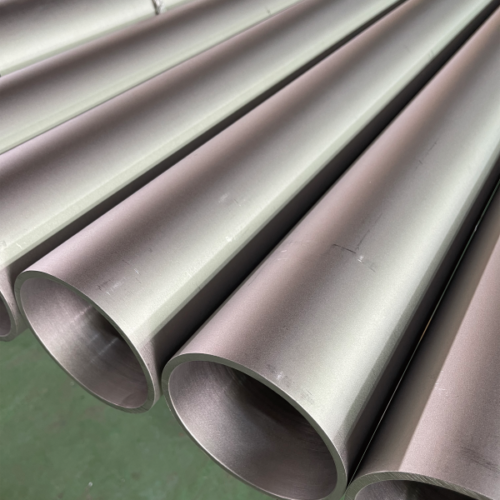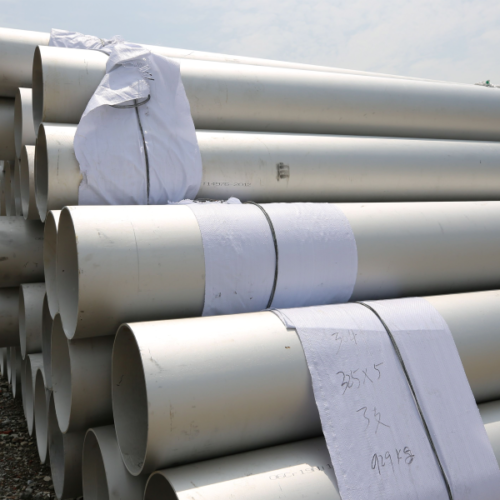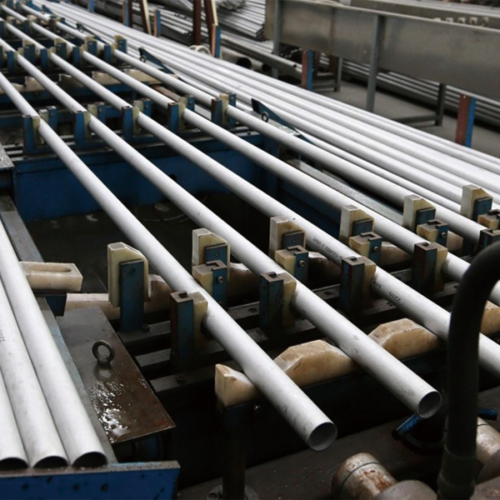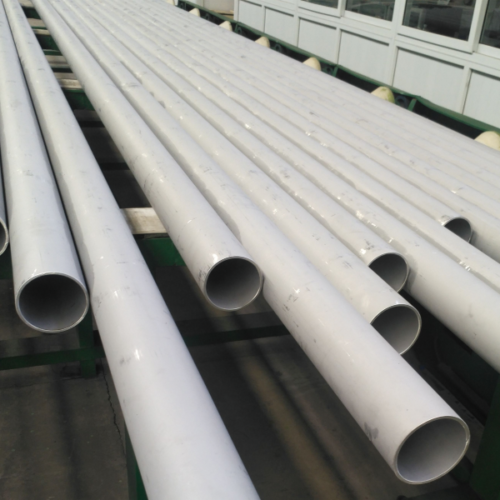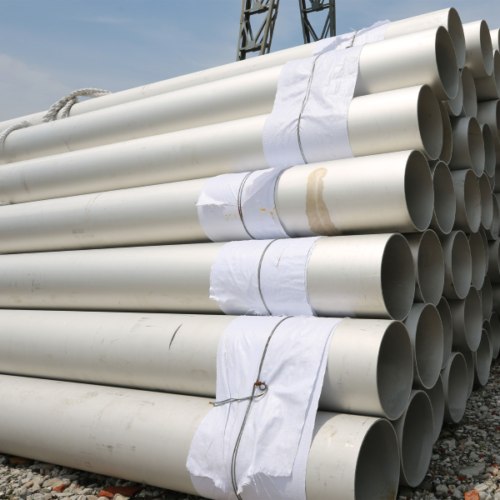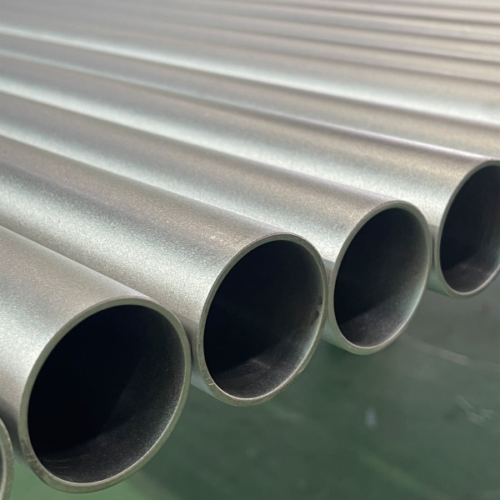

Introduction to TP310MoLN Stainless Steel
TP310MoLN Seamless Stainless Steel Pipe is supplied for urea-grade corrosion resistance with molybdenum and nitrogen alloying. The size range shown (OD 6–1016 mm; WT 0.5–65 mm) is the overall capability across this product family, not a per-grade commitment. Confirm the specific OD × WT × length combination for the ordered grade in the quotation. The governing specification must be stated on the purchase order: ASTM A312 / ASME SA312, confirm UNS S31050 against the order. Chemistry, mechanical properties, heat treatment, dimensional tolerance, NDT and certification must be reported against the ordered standard and material heat; do not treat typical values as guaranteed acceptance limits.
A Seamless TP310MoLN Pipe is manufactured from a single solid billet using hot extrusion and precision cold drawing processes. This seamless structure has no longitudinal weld seam, removing the weld-related corrosion initiation sites that must otherwise be considered in high-pressure carbamate services and chloride-rich environments.
Because of its exceptional corrosion resistance and structural stability, TP310MoLN has become a widely used material for urea-grade and other highly corrosive process service where molybdenum- and nitrogen-alloyed austenitic grades are specified.
Why Choose TP310MoLN Stainless Steel Pipes
TP310MoLN is an advanced nitrogen-enhanced modification of the traditional 310 series stainless steels. Its optimized chemical composition significantly improves corrosion resistance and mechanical strength.
Key Advantages
Excellent Resistance to Carbamate Corrosion
The alloy is specifically engineered to resist ammonium carbamate solutions used in high-pressure urea synthesis loops.
Improved Pitting and Crevice Corrosion Resistance
The addition of molybdenum and nitrogen increases the alloy’s Pitting Resistance Equivalent Number (PREN), providing superior resistance in chloride-containing environments.
Enhanced Mechanical Strength
Nitrogen strengthening increases both yield strength and tensile strength, enabling optimized wall thickness designs in high-pressure piping systems.
Stable Fully Austenitic Structure
The alloy maintains a fully austenitic microstructure, preventing the formation of brittle sigma phases that could compromise mechanical properties.
Seamless Manufacturing Reliability
Seamless pipes avoid the weld-related corrosion risks associated with welded pipe, such as weld decay and preferential corrosion paths, which is critical for high-purity chemical systems.
Product Specifications and Data
Equivalent Grade
| UNS | Common grade name | EN material number | EN steel name | JIS grade | GB/T grade |
|---|---|---|---|---|---|
| S31050 | 310MoLN / 725LN | 1.4466 | X1CrNiMoN25-22-2 | SUS 310MoLN | 022Cr25Ni22Mo2N |
Grade correspondence does not make ASTM, ASME, EN, JIS and GB delivery requirements interchangeable. Confirm chemistry, heat treatment, mechanical properties, dimensions, testing and certification against the purchase specification. See the grade designation index.
Chemical Composition
The composition is carefully controlled to ensure a ferrite-free and fully austenitic structure suitable for urea-grade service.
| Cr | Ni | Mo | N | P | S | Mn | Si | C |
|---|---|---|---|---|---|---|---|---|
| 24.00 – 26.00 | 20.50 – 23.50 | 1.60 – 2.60 | 0.09 – 0.15 | ≤ 0.020 | ≤ 0.015 | ≤ 2.00 | ≤ 0.40 | ≤ 0.025 |
Data source: ASTM A312-25 / ASME SA312 Table 1, UNS S31050 ≤ heat-analysis acceptance limits. Confirm the values against the ordered edition and the MTC.
Typical Mechanical Properties
Stainless Steel TP310MoLN is specifically designed to maintain its strength and shape in high-stress, corrosive environments.
| Tensile Strength (min) | Yield Strength (min) | Elongation (min) | Hardness (max) |
|---|---|---|---|
| t ≤ 0.250 in. [6.35 mm]: 84 ksi [580 MPa]; t > 0.250 in.: 78 ksi [540 MPa] | t ≤ 0.250 in.: 39 ksi [270 MPa]; t > 0.250 in.: 37 ksi [255 MPa] | 25% | 95 HRB |
Note: Typical values for reference only — not acceptance limits. Mechanical properties are reported on the MTC against the ordered standard, product form, condition and test temperature.
Typical Physical Properties
These physical properties highlight the material’s ability to perform reliably under a wide range of conditions.
| Density | Melting Point | Thermal Expansion | Thermal Conductivity | Modulus of Elasticity | Electrical Resistivity |
|---|---|---|---|---|---|
| 8.0 g/cm3 | 1390 – 1440 °C approx. | 16.5 μm/m·°C (20-100°C) | 16.0 W/m·K (20°C) | 193 GPa | 0.74 × 10⁻⁶ Ω·m (20°C) |
Note: Typical values for reference only — not acceptance limits. Physical and mechanical properties are reported on the MTC against the ordered standard, product form and condition.
Size Tolerance Chart (mm)
| NPS Designator (Inches) | Permissible Variations in Outside Diameter (Inches) |
| 1⁄8 to 1 1⁄2, inclusive | Over: 1⁄64 in. (0.015 in.) |
| Under: 1⁄32 in. (0.031 in.) | |
| Over 1 1⁄2 to 4, inclusive | Over: 1⁄32 in. (0.031 in.) |
| Under: 1⁄32 in. (0.031 in.) | |
| Over 4 to 8, inclusive | Over: 1⁄16 in. (0.062 in.) |
| Under: 1⁄32 in. (0.031 in.) | |
| Over 8 to 18, inclusive | Over: 3⁄32 in. (0.093 in.) |
| Under: 1⁄32 in. (0.031 in.) | |
| Over 18 to 26, inclusive | Over: 1⁄8 in. (0.125 in.) |
| Under: 1⁄32 in. (0.031 in.) | |
| Over 26 to 34, inclusive | Over: 5⁄32 in. (0.156 in.) |
| Under: 1⁄32 in. (0.031 in.) | |
| Over 34 to 48, inclusive | Over: 3⁄16 in. (0.187 in.) |
| Under: 1⁄32 in. (0.031 in.) |
Tolerance basis: permitted variations per the governing specification stated on this page and the applicable general-requirements standard (ASTM A999 / ASME SA999) for the ordered product form; the wall-thickness and length variations in this section follow the same basis.
The wall thickness tolerances are defined by the nominal wall thickness (t) and the outside diameter (D).
1. Minimum Wall Thickness
The minimum wall thickness at any point on the pipe shall not be more than {12.5%} under the nominal (specified) wall thickness.
2. Maximum Wall Thickness (Percentage Over Nominal)
The maximum allowable wall thickness variation depends on the size and the t/D ratio (ratio of nominal wall thickness to ordered outside diameter):
| NPS Designator (Inches) | t/D Ratio | Permissible Variation (Over Nominal WT) |
| 1/8 to 2, inclusive | All ratios | +20.0% |
| 3 to 18, inclusive | t/D ≤ 5% | +22.5% |
| 3 to 18, inclusive | t/D >5% | +15.0% |
| 20 and larger (Seamless) | t/D ≤ 5% | +22.5% |
| 20 and larger (Seamless) | t/D >5% | +15.0% |
| 20 and larger (Welded) | All ratios | +17.5% |
For pipe ordered to a Specific Cut Length, the standard tolerance is +1⁄8 in. [3.2 mm], -0 in. [0 mm].
Pipe is typically supplied in Single Random Lengths (17 to 24 ft) or Double Random Lengths (38 to 40 ft), unless otherwise specified.
Disclaimer: These tolerances are based on ASTM A999/A999M general dimensional requirements commonly referenced by ASTM A312 and ASTM A790. The full and most current specification document must always be consulted for official design and procurement purposes.
Manufacturing Process and Quality Control
All Seamless TP310MoLN pipes are manufactured and tested according to international standards including:
- ASTM A312 – Seamless Stainless Steel Pipe
- ASTM A213 – Stainless Steel Tubing for Heat Exchangers
- EN 10216-5 – Seamless Stainless Steel Tubes for Pressure Purposes
Urea Grade Quality Testing
To ensure performance in urea synthesis environments, pipes undergo rigorous testing procedures.
Huey Test (ASTM A262 Practice C)
Used to verify resistance to intergranular corrosion in nitric acid environments.
Microstructural Examination
Ensures the material maintains a fully austenitic structure without ferrite or sigma phases.
Non-Destructive Testing (NDT)
- Ultrasonic Testing (UT)
- Eddy Current Testing (ET)
Full Material Traceability
Pipes are supplied with EN 10204 3.1 Material Test Certificates (MTC) including chemical and mechanical test results; 3.2 is available by arrangement when a third-party witness is specified on the purchase order.
Industrial Applications of TP310MoLN Pipes
Due to its excellent resistance to carbamate corrosion and high mechanical strength, TP310MoLN pipes are widely used in several critical industries.
Urea and Fertilizer Production
Primary applications include:
- High-pressure urea synthesis piping
- Strippers and condensers
- Carbamate scrubbers
- Urea reactors
Chemical Processing Industry
Used for equipment handling aggressive chemical environments including:
- Nitric acid processing
- Organic acid production
- Corrosive chemical reactors
Marine and Offshore Systems
TP310MoLN is suitable for:
- Seawater handling systems
- Desalination plants
- Offshore chemical processing equipment
Pulp and Paper Industry
The alloy is used in:
- Bleaching plant systems
- Chemical recovery equipment
- Corrosion-resistant piping networks
Importance of the Huey Test for TP310MoLN
For stainless steels used in urea synthesis service, corrosion testing beyond the standard room-temperature tests is commonly specified. The Huey Test (ASTM A262 Practice C) is widely accepted as the industry benchmark for evaluating intergranular corrosion resistance.
Huey Test Procedure
The test involves exposing stainless steel samples to boiling 65% nitric acid (HNO₃) for five consecutive 48-hour cycles, totaling 240 hours. After each cycle, weight loss is measured to determine the corrosion rate.
Why the Huey Test Is Critical
Detection of Sensitization
The test determines whether chromium carbide precipitation has occurred at grain boundaries, which could lead to intergranular corrosion in service.
Verification of Urea Grade Materials
To qualify for urea plant applications, TP310MoLN typically must demonstrate an average corrosion rate of ≤ 0.15 mm/year (or ≤ 3.3 μm per 48 hours).
Microstructural Integrity
After testing, samples are examined metallographically to confirm that no grain boundary attack, pitting, or tunneling corrosion has occurred.
Our Huey Test Quality Commitment
Every batch of TP310MoLN seamless pipes is supplied with comprehensive testing certification, including:
- Verified corrosion rate results according to ASTM A262 Practice C
- Compliance with strict end-user specifications such as Stamicarbon or Saipem urea plant standards
- Confirmation of microstructural stability and absence of sigma phases
This ensures that the material meets the highest performance standards required in modern urea production facilities.
Frequently Asked Questions
What sizes are available for TP310MoLN seamless pipe?
The overall range is OD 6–1016 mm; WT 0.5–65 mm. Requirements outside this range are reviewed against mill capability on request.
Which specification governs TP310MoLN seamless pipe?
ASTM A312 / ASME SA312, confirm UNS S31050 against the order is the governing specification for TP310MoLN seamless pipe. The edition in force at order time is stated on the quotation and purchase order; chemistry, mechanical properties, heat treatment, dimensions and testing are reported against the ordered standard and material heat.
What inspection documents are provided?
Each order is documented with a mill test certificate stating heat chemistry and mechanical test results. EN 10204 3.1 certification, hydrostatic testing, eddy-current or ultrasonic inspection and PMI are performed when specified in the purchase order.
Technical review: page data reviewed by the Xinzhe technical desk on 2026-09-27. Chemistry acceptance limits are compiled from the governing ASTM/ASME specification stated on this page; mechanical and physical values are typical reference data and are not acceptance guarantees. Values must be confirmed against the standard edition in force at order time and the material test certificate.
Ready to Request a Quotation?
Send the NPS and schedule (or actual OD and wall), quantity, length, end finish and the inspection items you need as acceptance criteria — you will get a written quotation stating the specification and edition, delivery condition, documents included and lead time.
For the same grade in tube form, see the TP310MoLN seamless tube. To compare other grades and size combinations, browse the Stainless Steel Seamless Tube category. Minimum order quantity and lead time are confirmed on enquiry against the ordered grade, size and quantity.