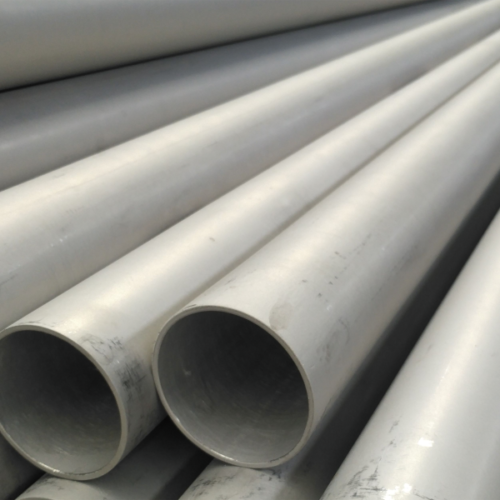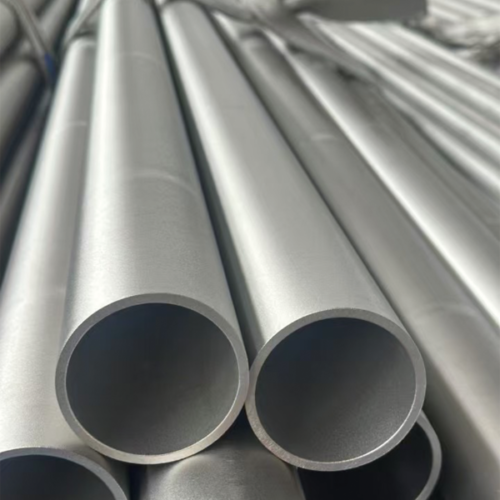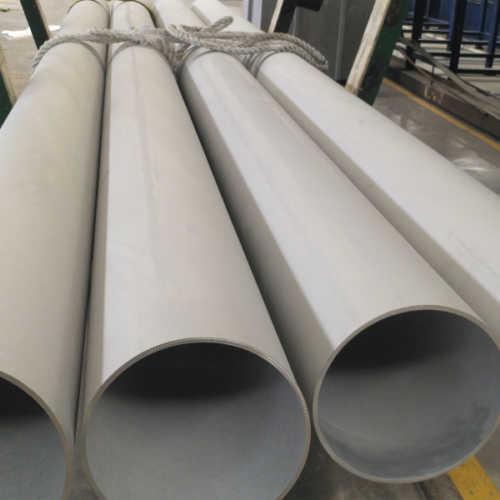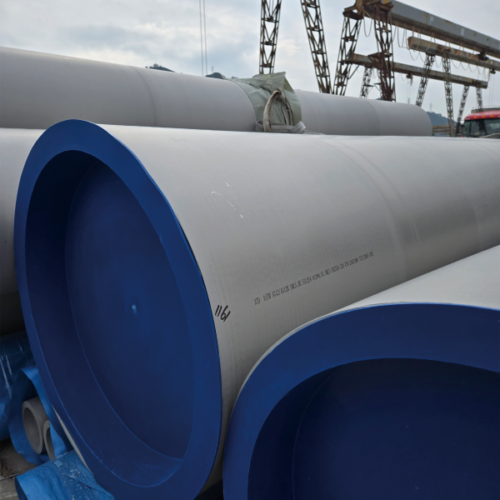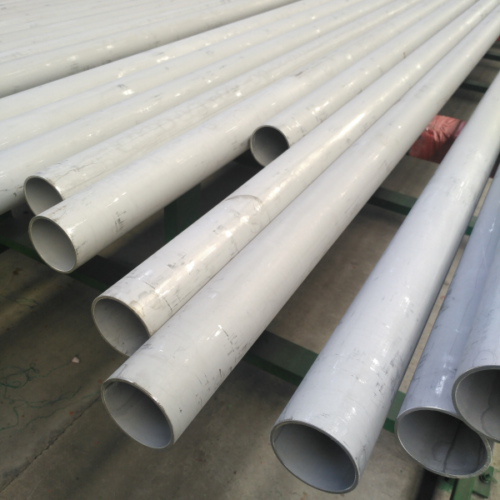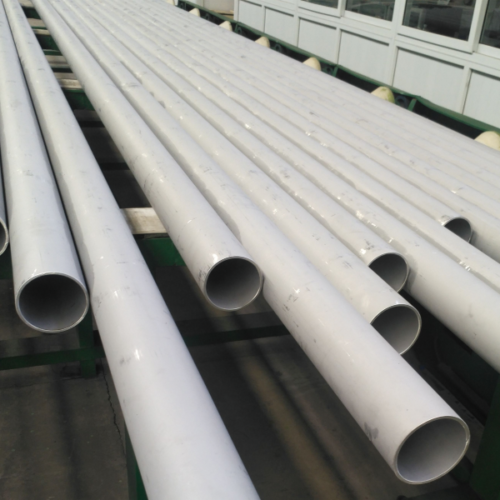
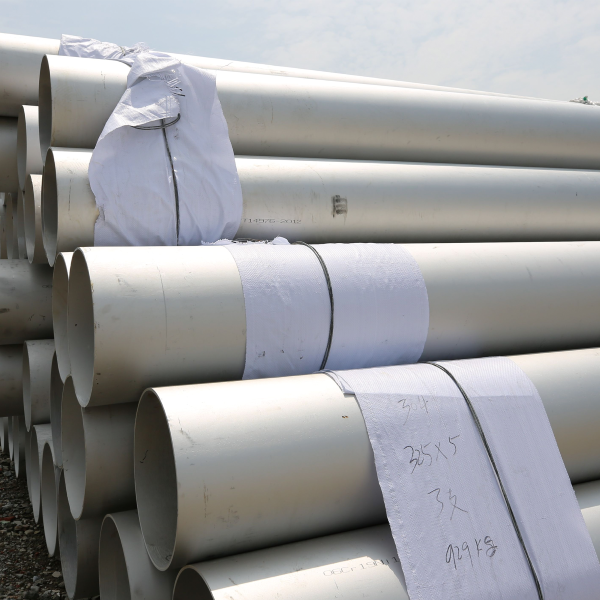
Why Choose TP304 Seamless Pipe?
TP304 Seamless Stainless Steel Pipe is supplied for general-purpose corrosion resistance and reliable fabrication. The size range shown (OD 6–1016 mm; WT 0.5–65 mm) is the overall capability across this product family, not a per-grade commitment. Confirm the specific OD × WT × length combination for the ordered grade in the quotation. The governing specification must be stated on the purchase order: ASTM A312 / ASME SA312. Chemistry, mechanical properties, heat treatment, dimensional tolerance, NDT and certification must be reported against the ordered standard and material heat; do not treat typical values as guaranteed acceptance limits.
Under the ASTM A312 specification, TP304 (Type 304 Stainless Steel) is an austenitic chromium-nickel alloy widely recognized as the most commonly used stainless steel grade worldwide.
The alloy typically contains 18% chromium and 8% nickel, often referred to as 18/8 stainless steel. This composition provides excellent corrosion resistance, weldability, formability, and oxidation resistance, making ASTM A312 TP304 seamless pipes suitable for a wide range of industrial applications.
Because of its balanced performance and cost efficiency, 304 stainless steel seamless pipe has become the industry standard material for general corrosion-resistant piping systems.
TP304 Seamless Pipe — Quick Specification
| Item | Specification |
|---|---|
| Product | TP304 seamless stainless steel pipe |
| Grade / UNS / EN | TP304 / S30400 / 1.4301 (X5CrNi18-10) |
| Standard | ASTM A312 / ASME SA312; dimensional tolerances per ASTM A999 |
| Manufacturing | Cold drawn or hot finished, solution annealed |
| Size | NPS 1/8–30 (DN6–DN750) within ASTM A312 scope; overall family capability OD 6–1016 mm — confirm the specific OD × wall × length in the quotation |
| Wall thickness | Sch 5S, 10S, 40S, 80S, 160S or custom |
| Length | Single random, double random, cut length |
| Ends | Plain end, beveled end |
| Surface | Pickled / bright annealed / polished |
| Documents | EN 10204 3.1 (3.2 on request), PMI, hydrostatic test, UT / ET |
TP304 Equivalent Grades
| ASTM / UNS | EN | JIS | GB | BS | Related grades |
|---|---|---|---|---|---|
| TP304 / S30400 | 1.4301 / X5CrNi18-10 | SUS 304 | 06Cr19Ni10 (GB/T 20878) | 304S31 | TP304L (S30403) · TP304H (S30409) |
Key Technical Advantages of TP304 Seamless Pipe
Choosing Seamless TP304 Stainless Steel Pipe provides several important engineering benefits compared with welded alternatives.
Excellent Corrosion Resistance
The high chromium-nickel content forms a stable passive oxide layer on the steel surface, providing strong resistance to oxidation, atmospheric corrosion, moisture, and a wide range of organic and inorganic chemicals.
Higher Pressure Capability
Because seamless pipe has no longitudinal weld seam, the weld joint efficiency factor that welded pipe requires is not applied; the actual allowable working pressure is still calculated from the governing design code, the grade and the wall thickness.
Uniform Mechanical Properties
The absence of a heat-affected zone (HAZ) ensures consistent tensile strength, yield strength, and hardness across the entire pipe wall.
Hygienic Internal Surface
The smooth internal bore of TP304 seamless tubing minimizes bacterial growth, scale formation, and sediment buildup, which is essential for sanitary processing systems.
Excellent Low-Temperature Toughness
Austenitic stainless steel maintains high impact toughness and ductility at cryogenic temperatures, making it suitable for low-temperature and LNG applications.
Product Specifications and Data
Chemical Composition
The superior properties of TP304 stainless steel are a direct result of its precisely controlled chemical composition. Below are the ASTM A312 heat-analysis limits for this grade:
| Grade | C | Si | Mn | Cr | Ni | S | P |
|---|---|---|---|---|---|---|---|
| 304 | ≤ 0.08 | ≤1.00 | ≤2.00 | 18.00-20.00 | 8.00-11.00 | ≤0.03 | ≤0.045 |
| 304L | ≤0.035 | ≤1.00 | ≤2.00 | 18.00-20.00 | 8.00-13.00 | ≤0.03 | ≤0.045 |
| 304H | 0.04-0.10 | ≤1.00 | ≤2.00 | 18.00-20.00 | 8.00-11.00 | ≤0.03 | ≤0.045 |
Data source: ASTM A312-25 / ASME SA312 Table 1, TP304 row ≤ heat-analysis acceptance limits. Confirm the values against the ordered edition and the MTC.
Typical Mechanical Properties
Mechanical properties are key indicators of how a material behaves under various forces. These figures directly relate to the strength, ductility, and overall resilience of TP304 seamless pipes.
| Material | Tensile Strength ksi(MPa) | Yield Strength ksi(MPa) | Elongation (%) | Hardness Brinell/Vickers | Hardness Rockwell |
|---|---|---|---|---|---|
| 304 | ≥75(515) | ≥30(205) | ≥ 35 | ≤192HBW/200HV | ≤90HRB |
| 304L | ≥70(485) | ≥25(170) | ≥ 35 | ≤192HBW/200HV | ≤90HRB |
| 304H | ≥75(515) | ≥30(205) | ≥ 35 | ≤192HBW/200HV | ≤90HR |
Note: Typical values for reference only — not acceptance limits. Mechanical properties are reported on the MTC against the ordered standard, product form, condition and test temperature.
Typical Physical Properties
Physical properties dictate a material’s inherent characteristics under different environmental conditions, such as density, melting point, and thermal conductivity.
| Density | Melting Point | Thermal Expansion | Thermal Conductivity | Modulus of Elasticity | Electrical Resistivity |
|---|---|---|---|---|---|
| 8.0 g/cm3 | 1400-1450 °C | 17.2 μm/m·°C | 16.2 W/m·K | 193 GPa | 0.72 × 10⁻⁶ Ω·m |
Note: Typical values for reference only — not acceptance limits. Physical and mechanical properties are reported on the MTC against the ordered standard, product form and condition.
Common Schedules and Wall Thickness (mm)
| NPS | OD | Sch 5S | Sch 10S | Sch 40S | Sch 80S |
|---|---|---|---|---|---|
| 1/2″ | 21.3 | 1.65 | 2.11 | 2.77 | 3.73 |
| 1″ | 33.4 | 1.65 | 2.77 | 3.38 | 4.55 |
| 2″ | 60.3 | 1.65 | 2.77 | 3.91 | 5.54 |
| 4″ | 114.3 | 2.11 | 3.05 | 6.02 | 8.56 |
| 6″ | 168.3 | 2.77 | 3.40 | 7.11 | 10.97 |
| 8″ | 219.1 | 2.77 | 3.76 | 8.18 | 12.70 |
Dimensions: wall thicknesses per ASME B36.19M for stainless steel pipe; approximate weight kg/m ≈ 0.02491 × t × (OD − t) at 8.0 g/cm³. Use the pipe & tube weight calculator for the exact weight of your size.
Size Tolerance Chart (mm)
| NPS Designator (Inches) | Permissible Variations in Outside Diameter (Inches) |
| 1⁄8 to 1 1⁄2, inclusive | Over: 1⁄64 in. (0.015 in.) |
| Under: 1⁄32 in. (0.031 in.) | |
| Over 1 1⁄2 to 4, inclusive | Over: 1⁄32 in. (0.031 in.) |
| Under: 1⁄32 in. (0.031 in.) | |
| Over 4 to 8, inclusive | Over: 1⁄16 in. (0.062 in.) |
| Under: 1⁄32 in. (0.031 in.) | |
| Over 8 to 18, inclusive | Over: 3⁄32 in. (0.093 in.) |
| Under: 1⁄32 in. (0.031 in.) | |
| Over 18 to 26, inclusive | Over: 1⁄8 in. (0.125 in.) |
| Under: 1⁄32 in. (0.031 in.) | |
| Over 26 to 34, inclusive | Over: 5⁄32 in. (0.156 in.) |
| Under: 1⁄32 in. (0.031 in.) | |
| Over 34 to 48, inclusive | Over: 3⁄16 in. (0.187 in.) |
| Under: 1⁄32 in. (0.031 in.) |
Tolerance basis: permitted variations per the governing specification stated on this page and the applicable general-requirements standard (ASTM A999 / ASME SA999) for the ordered product form; the wall-thickness and length variations in this section follow the same basis.
The wall thickness tolerances are defined by the nominal wall thickness (t) and the outside diameter (D).
1. Minimum Wall Thickness
The minimum wall thickness at any point on the pipe shall not be more than 12.5% under the nominal (specified) wall thickness.
2. Maximum Wall Thickness (Percentage Over Nominal)
The maximum allowable wall thickness variation depends on the size and the t/D ratio (ratio of nominal wall thickness to ordered outside diameter):
| NPS Designator (Inches) | t/D Ratio | Permissible Variation (Over Nominal WT) |
| 1/8 to 2, inclusive | All ratios | +20.0% |
| 3 to 18, inclusive | t/D ≤ 5% | +22.5% |
| 3 to 18, inclusive | t/D >5% | +15.0% |
| 20 and larger (Seamless) | t/D ≤ 5% | +22.5% |
| 20 and larger (Seamless) | t/D >5% | +15.0% |
| 20 and larger (Welded) | All ratios | +17.5% |
For pipe ordered to a Specific Cut Length, the standard tolerance is +1⁄8 in. [3.2 mm], -0 in. [0 mm].
Pipe is typically supplied in Single Random Lengths (17 to 24 ft) or Double Random Lengths (38 to 40 ft), unless otherwise specified.
Disclaimer: These tolerances are based on ASTM A999/A999M general dimensional requirements commonly referenced by ASTM A312 and ASTM A790. The full and most current specification document must always be consulted for official design and procurement purposes.
TP304 vs TP304L vs TP316L: What Is the Difference?
All three grades are austenitic stainless steel supplied to ASTM A312. The key differences are carbon content, molybdenum addition and minimum strength — the factors that decide between general corrosion resistance, welded construction and chloride service.
| Property | TP304 | TP304L | TP316L |
|---|---|---|---|
| UNS | S30400 | S30403 | S31603 |
| Carbon (max) | ≤0.08% | ≤0.035% | ≤0.035% |
| Molybdenum | none | none | 2.00–3.00% |
| Tensile strength (min) | 515 MPa | 485 MPa | 485 MPa |
| Yield strength (min) | 205 MPa | 170 MPa | 170 MPa |
| Best for | General corrosion resistance | Welded construction, less sensitization | Chlorides, harsher chemicals |
Chemistry per ASTM A312 heat-analysis limits; strength values are ASTM A312 minimum requirements for annealed pipe. For chloride service beyond TP316L capability, enquire for duplex S32205 or super duplex S32750 seamless pipe.
Typical Applications of ASTM A312 TP304 Seamless Pipe
Due to its versatility and compliance with ASME and ASTM standards,TP304 seamless stainless steel pipe is widely used across multiple industries.
Oil & Gas and Petrochemical Industry
- Instrumentation tubing
- Low-pressure process piping
- Heat exchanger systems
- Corrosion-resistant fluid transport lines
Food and Beverage Processing
TP304 stainless steel is widely recognized as the preferred material for hygienic piping systems, including:
- Breweries and beverage production lines
- Dairy processing equipment
- Liquid food transport systems
Pharmaceutical and Biotechnology
The smooth surface and corrosion resistance of 304 stainless steel tubing make it suitable for:
- Purified Water (PW) systems
- Water for Injection (WFI) systems
- Sterile process piping
Chemical Processing Industry
TP304 pipes are commonly used for transporting:
- Mild acids
- Alkalis
- Chemical solvents
- Process fluids requiring corrosion resistance
Architectural and Structural Applications
Because of its clean appearance and long-term durability, TP304 stainless steel pipe is also used in:
- Architectural railings
- Structural supports
- Decorative stainless steel structures
Quality Assurance and International Compliance
To maintain consistent quality and full traceability, all Seamless TP304 Stainless Steel Pipes are supplied with comprehensive testing and certification documentation.
Certification & Test | Technical Description |
Material Test Certificates (MTC) | EN 10204 3.1 as standard; EN 10204 3.2 (third-party witnessed) on arrangement |
Material Verification | 100% Positive Material Identification (PMI) to verify alloy composition |
Non-Destructive Testing (NDT) | Ultrasonic Testing (UT) and Eddy Current Testing (ECT) for internal defect detection |
Pressure Testing | Hydrostatic pressure testing to ensure leak-free performance |
Dimensional Inspection | Full dimensional inspection and surface roughness (Ra) measurement |
Heat Treatment Records | Solution annealing charts and quenching documentation |
Frequently Asked Questions
What sizes are available for TP304 seamless pipe?
The overall range is OD 6–1016 mm; WT 0.5–65 mm. Requirements outside this range are reviewed against mill capability on request.
Which specification governs TP304 seamless pipe?
ASTM A312 / ASME SA312 is the governing specification for TP304 seamless pipe. The edition in force at order time is stated on the quotation and purchase order; chemistry, mechanical properties, heat treatment, dimensions and testing are reported against the ordered standard and material heat.
What inspection documents are provided?
Each order is documented with a mill test certificate stating heat chemistry and mechanical test results. EN 10204 3.1 certification, hydrostatic testing, eddy-current or ultrasonic inspection and PMI are performed when specified in the purchase order.
What is the difference between TP304 and TP304L?
TP304L has a lower carbon limit (≤0.035% vs ≤0.08%), which reduces sensitization after welding. TP304 has slightly higher minimum strength: 515 MPa tensile and 205 MPa yield versus 485 MPa and 170 MPa for TP304L.
Is TP304 seamless pipe suitable for seawater or chloride service?
Not for warm or concentrated chloride environments. TP304 has no molybdenum and is prone to pitting and crevice corrosion in chlorides. Consider TP316L, duplex S32205 or super duplex S32750 for those conditions.
What is the difference between seamless and welded TP304 pipe?
Seamless pipe has no longitudinal weld seam. Welded pipe is formed from strip and welded, then annealed. The allowable pressure for both is calculated from the design code, grade and wall thickness.
What heat treatment does TP304 pipe receive?
TP304 pipe is supplied solution annealed and quenched, as required by ASTM A312. Heat treatment records are provided with the MTC.
Can you supply TP304L or TP304H?
Yes. Tell us the grade and we will quote against ASTM A312 with the matching chemistry. TP304L (S30403) and TP304H (S30409) follow the same testing and documentation flow.
What is the minimum order quantity and lead time?
MOQ and lead time are confirmed on enquiry against the ordered grade, size and quantity. Trial quantities for common schedules are welcome — the written quotation states the specification and edition, delivery condition, documents and lead time.
Technical review: page data reviewed by the Xinzhe technical desk on 2026-10-03. Chemistry acceptance limits are compiled from the governing ASTM/ASME specification stated on this page; mechanical and physical values are typical reference data and are not acceptance guarantees. Values must be confirmed against the standard edition in force at order time and the material test certificate.
Ready to Request a Quotation?
Send the NPS and schedule (or actual OD and wall), quantity, length, end finish and the inspection items you need as acceptance criteria — you will get a written quotation stating the specification and edition, delivery condition, documents included and lead time.
For the same grade in tube form, see the TP304 seamless tube. To compare other grades and size combinations, browse the Stainless Steel Seamless Tube category. Minimum order quantity and lead time are confirmed on enquiry against the ordered grade, size and quantity.