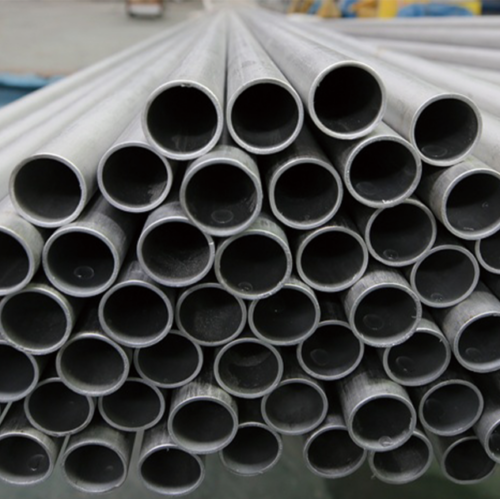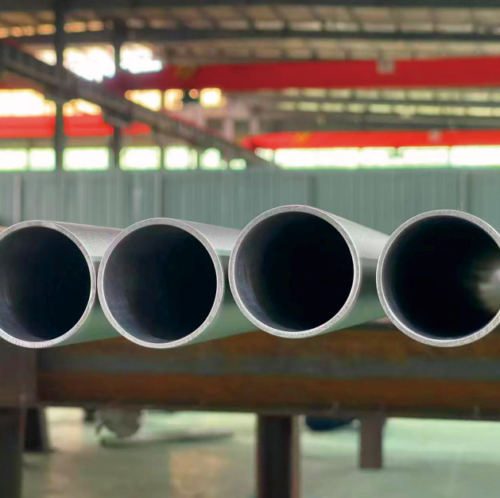
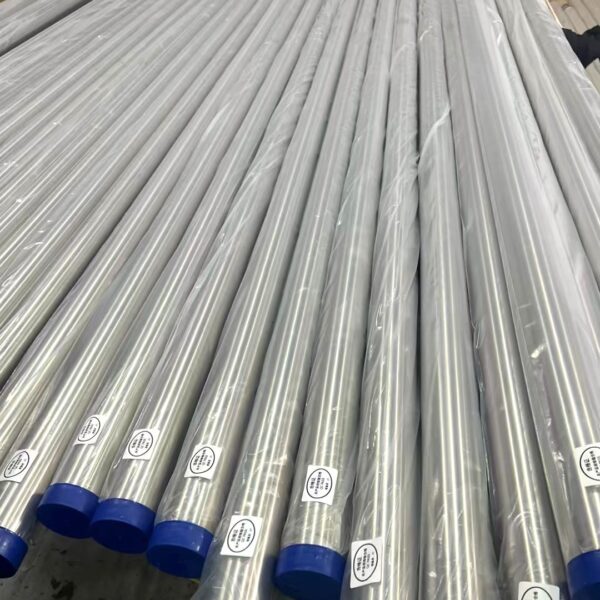
What is a Seamless Stainless Steel TP304L Tube?
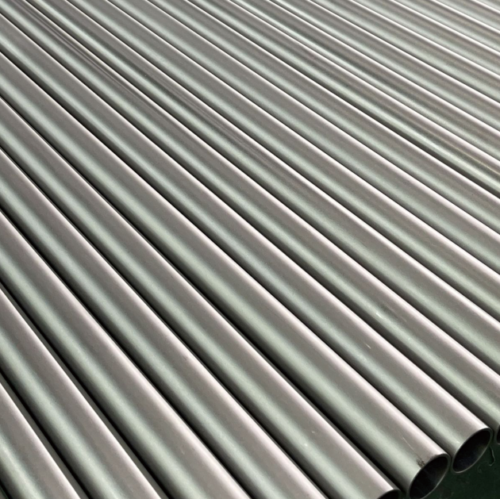
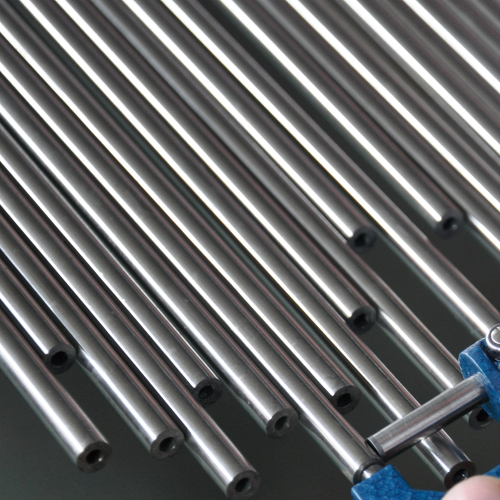
Seamless Stainless Steel TP304L Tube, also known as 1.4307 Stainless Steel Tube or UNS S30403 Tube, is a corrosion-resistant stainless steel tubing manufactured from a solid billet through a seamless process.
Unlike welded tubes, seamless TP304L tubing contains no weld seam, which significantly improves structural integrity, pressure resistance, and reliability in demanding industrial environments.
Because of its low carbon composition and excellent corrosion resistance,TP304L seamless stainless steel tube is widely used in industries such as oil & gas, chemical processing, pharmaceutical production, food processing, and aerospace engineering.
Common manufacturing standards include:
- ASTM A213 TP304L Seamless Tube – for boilers and heat exchangers
- ASTM A269 TP304L Seamless Tube – for general service and instrumentation
- ASTM A312 TP304L Pipe – for industrial piping systems
Product Specifications and Data
To provide a comprehensive overview of this high-performance material, here are the detailed technical specifications and performance data for Super Duplex Steel UNS S32760.



The Standard of ASTM A789 Size Tolerance Size Chart :
| Specified Outside Diameter (OD) (Inches) | Permissible Variations in OD (± Inches) |
| 1⁄2 to 1 | ±0.005 |
| Over 1 to 1-1⁄2 | ±0.008 |
| Over 1-1⁄2 to 2 | ±0.010 |
| Over 2 to 2-1⁄2 | ±0.012 |
| Over 2-1⁄2 to 3-1⁄2 | ±0.014 |
| Over 3-1⁄2 to 5 | ±0.020 |
| Specified Outside Diameter (OD) (Inches) | Specified Wall Thickness (WT) (Inches) | Permissible Variation (± Inches) |
| 1⁄2 to 1 (Inclusive) | 0.025 to 0.065(Inclusive) | ±0.010 |
| Over 0.065to 0.134 (Inclusive) | ±0.012 | |
| Over 1 to 1-1⁄2 (Inclusive) | 0.025 to 0.065 (Inclusive) | ±0.010 |
| Over 0.065 to 0.134 (Inclusive) | ±0.012 | |
| Over 1-1⁄2 to 2 (Inclusive) | 0.025 to 0.049 (Inclusive) | ±0.011 |
| Over 0.049 to 0.083 (Inclusive) | ±0.012 | |
| Over 0.083 to 0.148 (Inclusive) | ±0.014 | |
| Over 2 to 2-1⁄2 (Inclusive) | 0.032 to 0.065 (Inclusive) | ±0.013 |
| Over 0.065 to 0.109 (Inclusive) | ±0.015 | |
| Over 0.109 to 0.165 (Inclusive) | ±0.017 | |
| Over 2-1⁄2 to 3-1⁄2 (Inclusive) | 0.032 to 0.165 (Inclusive) | ±0.020 |
| Over 0.165 to 0.220 (Inclusive) | ±0.025 | |
| Over 3-1⁄2 to 5 (Inclusive) | 0.083 to 0.165 (Inclusive) | ±0.025 |
| Over 0.165 to 0.220 (Inclusive) | ±0.030 |
Length Tolerance
ForSpecific Cut Lengths, the standard tolerance is +1⁄8 in. [3 mm], -0 in. [0 mm].
Important Note: The values presented here are based on the common tables in the ASTM A789 standard. The full specification, particularly the referenced ASTM A1016/A1016M (General Requirements for Ferritic Alloy Steel, Austenitic Alloy Steel, and Stainless Steel Tubes), contains other essential requirements like straightness and details for tubes with ODs outside of this range. Always consult the latest official standard for design and procurement.
Common Industrial Applications
Due to its excellent corrosion resistance, weldability, and mechanical strength,TP304L seamless tubing is widely used in critical industries.
Pharmaceutical & Biotechnology
TP304L tubes are used in sterile fluid transfer systems, medical tubing, and hypodermic needle manufacturing where hygiene and chemical stability are essential.
Oil & Gas Industry
In upstream and downstream operations, seamless TP304L tubing is used for:
- Instrumentation tubing
- Control lines
- Heat exchanger tubing
- Corrosion-resistant piping systems
Chemical Processing Plants
TP304L tubes are suitable for handling corrosive fluids, solvents, and chemical reagents in process equipment.
Food & Beverage Processing
Because stainless steel TP304L meets strict sanitary and hygiene standards, it is commonly used in:
- Dairy processing lines
- Beverage production systems
- Food manufacturing equipment
Aerospace & Precision Engineering
In aerospace and high-precision manufacturing, TP304L seamless tubing is used for:
- Hydraulic systems
- Fuel delivery lines
- Pressure sensors
- Flow measurement equipment
Why Choose TP304L Stainless Steel Tubing?
The“L” in TP304L stands for Low Carbon, which provides important advantages during welding and fabrication.
Low Carbon Composition
TP304L contains maximum 0.03% carbon, compared to 0.08% in standard 304 stainless steel.
This significantly reduces the risk of chromium carbide precipitation, also known as sensitization, during welding.
Improved Corrosion Resistance After Welding
Because carbide precipitation is minimized, TP304L stainless steel tubes maintain their corrosion resistance even in the heat-affected zone (HAZ).
This eliminates the need for post-weld annealing in most applications.
Excellent Weldability
TP304L seamless tubes are ideal for systems requiring extensive welding, such as piping networks, instrumentation lines, and sanitary process systems.
Key Technical Advantages of Seamless TP304L Tubing
Feature | Industrial Benefit |
Seamless Construction | No weld seam means higher burst pressure and improved reliability |
Resistance to Intergranular Corrosion | Ideal for welded components used in corrosive environments |
High Dimensional Precision | Tight tolerances on outside diameter (OD) and wall thickness (WT) |
Cryogenic Strength | Excellent toughness at extremely low temperatures |
Smooth Internal Surface | Reduces fluid friction and prevents bacterial buildup |
Because of these properties, TP304L seamless stainless steel tubes are widely chosen for high-purity and high-pressure applications.
TP304L Stainless Steel Tube Quality Assurance and Testing
To ensure global industrial standards, every TP304L seamless tube undergoes comprehensive testing and certification.
Certification and Documentation
- EN 10204 3.1 / 3.2 Material Test Certificates
- Raw material heat number traceability
- Third-party inspection reports (TPI)
- PMI – Positive Material Identification
Non-Destructive Testing (NDT)
- Eddy Current Testing (ET)
- Ultrasonic Testing (UT)
- Hydrostatic Testing (HT)
Mechanical and Metallurgical Testing
- Tensile testing
- Hardness testing
- Flattening and flaring tests
- Bend testing
- Intergranular corrosion (IGC) testing
- Grain size and microstructure analysis
Dimensional & Surface Inspection
- PrecisionOD / ID measurement
- Wall thickness inspection
- Surface roughness testing (Ra)
These inspections guarantee that TP304L stainless steel seamless tubing meets ASTM and international quality standards.
TP304 vs TP304L Stainless Steel Tube
Property | TP304 | TP304L |
Carbon Content | Max 0.08% | Max 0.03% |
Corrosion Resistance | Excellent | Superior after welding |
Strength | Slightly higher | Slightly lower |
Post-Weld Heat Treatment | Often required | Usually not required |
Because of its better weldability and corrosion resistance,TP304L stainless steel tubing is generally preferred in fabricated piping systems and welded structures.
FAQ – Seamless Stainless Steel TP304L Tube
What is the difference between TP304 and TP304L?
TP304L contains lower carbon content, which prevents carbide precipitation during welding and improves corrosion resistance in the heat-affected zone.
What standards apply to TP304L seamless tubes?
The most common standards are ASTM A213, ASTM A269, and ASTM A312.
Is TP304L suitable for high-pressure applications?
Yes. Because of its seamless construction, TP304L tubing offers higher pressure resistance compared to welded tubes.
What industries commonly use TP304L tubes?
Major industries include oil & gas, chemical processing, pharmaceuticals, food processing, and aerospace.