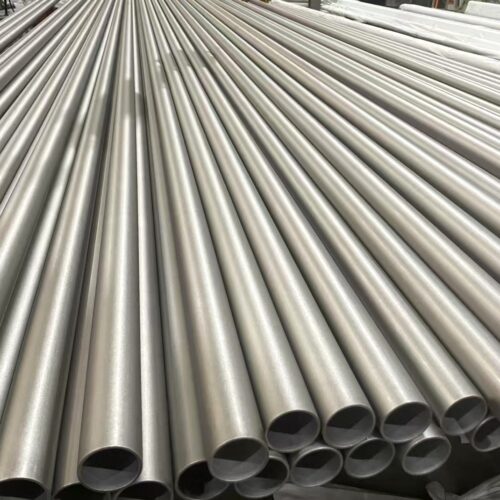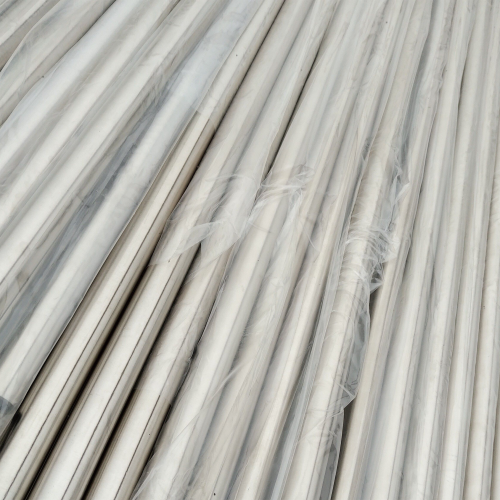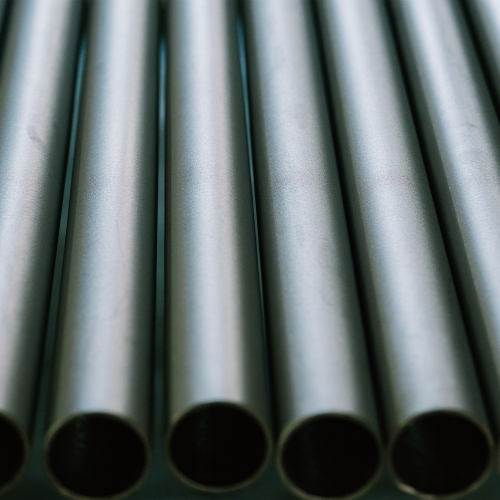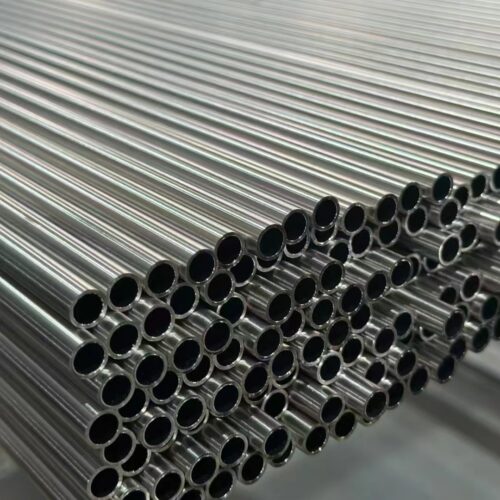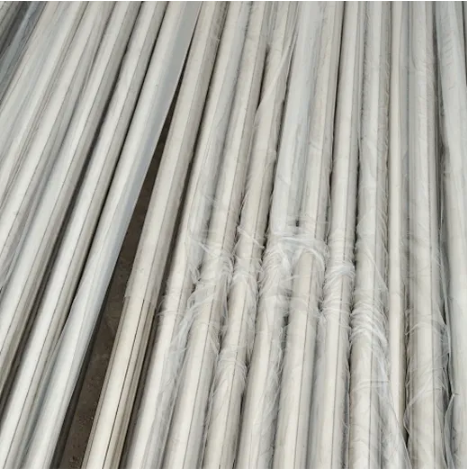


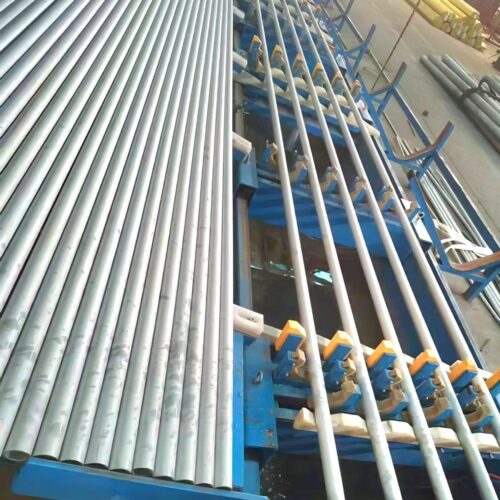
Seamless Alloy 31 tube

Seamless Alloy 31 Tubes (UNS N08031 / W.Nr. 1.4562) are high-performance iron-nickel-chromium-molybdenum solutions engineered for extreme resistance to pitting, crevice corrosion, and stress corrosion cracking (SCC). As a premier manufacturer based in Wenzhou, China, XinZhe produces high-integrity seamless tubing that strictly adheres to ASTM B622 and ASME SB622 international standards.

Distinguished by a high Pitting Resistance Equivalent Number (PREN ≥ 48), our Alloy 31 tubing excels in aggressive environments containing hot concentrated phosphoric acid, sulfuric acid, and high-chloride media. With mechanical strength significantly surpassing standard austenitic steels, these tubes are indispensable for mission-critical applications in flue gas desulfurization (FGD), chemical reactors, and fine chemical processing. Through advanced cold-drawing and specialized solution annealing, XinZhe ensures every tube maintains a uniform microstructure and maximum durability for the most demanding industrial conditions.

PREN = %Cr + 3.3X(%Mo + 0.5X%W) + 16X%N≥ 48
Seamless Alloy 31 Tube (UNS N08031 / 1.4562) – Super Austenitic Stainless Steel for Severe Corrosion Environments

1. Overview of Seamless Alloy 31 Tube

Seamless Alloy 31 tube (UNS N08031 / W.Nr. 1.4562) is a high-performance super austenitic stainless steel with a Fe–Ni–Cr–Mo composition, specifically engineered for extreme corrosive environments.

Manufactured through a seamless process from solid billets (piercing + cold drawing), it features a fully homogeneous, weld-free structure, ensuring superior pressure resistance and eliminating the risk of weld-related corrosion or failure.

With a high PREN value ≥ 48, Alloy 31 offers exceptional resistance to localized corrosion and serves as a cost-effective alternative to higher nickel alloys such as Alloy 625 and C276 in many aggressive chemical applications.

2. Key Technical Advantages

  • Outstanding Corrosion Resistance
    Excellent resistance to pitting, crevice corrosion, and general corrosion in halide-containing media, sulfuric acid (HSO), and phosphoric acid (HPO).
  • High Resistance to Stress Corrosion Cracking (SCC)
    Elevated nickel and molybdenum content significantly improves resistance to chloride-induced SCC.
  • Enhanced Performance in Reducing Acids
    The addition of Copper (Cu) and Nitrogen (N) enhances corrosion resistance in strongly reducing environments.
  • Good High-Temperature Stability
    Maintains mechanical integrity at elevated temperatures, outperforming conventional 300-series stainless steels.
  • Excellent Weldability
    Low susceptibility to intergranular corrosion in the heat-affected zone (HAZ), ensuring reliable fabrication performance.
  • Cost-Effective Alternative to Nickel Alloys
    Provides an optimal balance between performance and cost compared to high-grade nickel alloys (e.g., Alloy 625, C276).

Product Specifications and Data

The composition of Alloy 31 is carefully balanced to achieve its superior corrosion resistance and high strength.

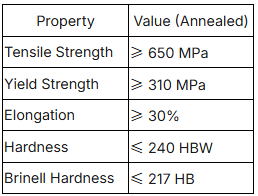
Alloy 31 is specifically designed to maintain its strength and shape in high-stress, corrosive environments.

These physical properties highlight the material’s ability to perform reliably under a wide range of conditions.

Typical Applications

Seamless Alloy 31 tubes are widely used in industries requiring superior corrosion resistance:

Chemical & Petrochemical Industry

Heat exchangers, evaporators, and piping systems for sulfuric and phosphoric acid production

Oil & Gas / Marine Engineering

Seawater systems, fire-fighting pipelines, offshore platforms, and sour service environments (HS)

Environmental Engineering

Flue Gas Desulfurization (FGD) systems and wastewater treatment plants

Pulp & Paper Industry

Bleaching systems handling chlorine dioxide and aggressive chemicals

Manufacturing Process & Quality Control

Advanced Manufacturing Process

Each seamless Alloy 31 tube undergoes a strict and controlled production process:

  1. Billet Heating
    Controlled heating to ensure uniform metallurgical structure
  2. Rotary Piercing
    Formation of hollow shell without weld seams or stress concentration
  3. Cold Drawing / Cold Rolling
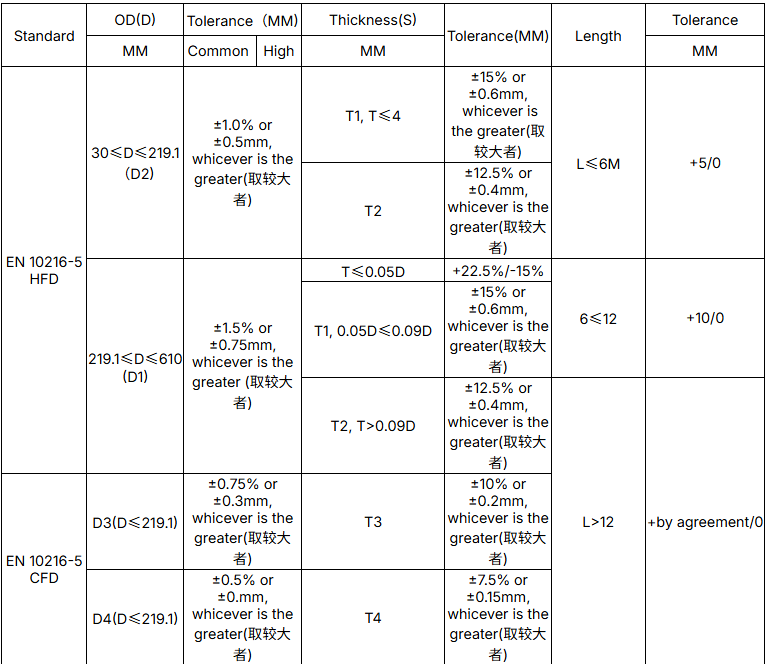
    Precision sizing to achieve tight tolerances and smooth surface finish
  4. Solution Annealing
    Heat treatment at 1150–1180°C followed by rapid quenching to restore corrosion resistance
  5. Non-Destructive Testing (NDT)
    • Eddy Current Testing (ET)
    • Ultrasonic Testing (UT)
    • Hydrostatic Testing (HT)

Quality Assurance & Certification

  • Material Certification
    EN 10204 3.1 / 3.2 Mill Test Certificate (MTC)
  • Inspection & Testing
    PMI, UT, ET, Hydro Test, Intergranular Corrosion (IGC)
  • Third-Party Inspection Available
    ABS, DNV, BV, TÜV, Lloyd’s Register
  • Full Traceability
    From raw material to finished product