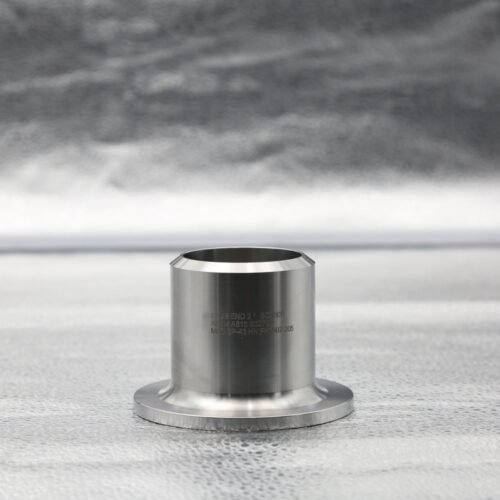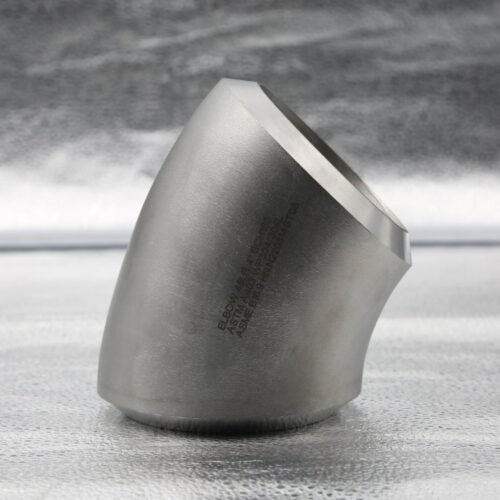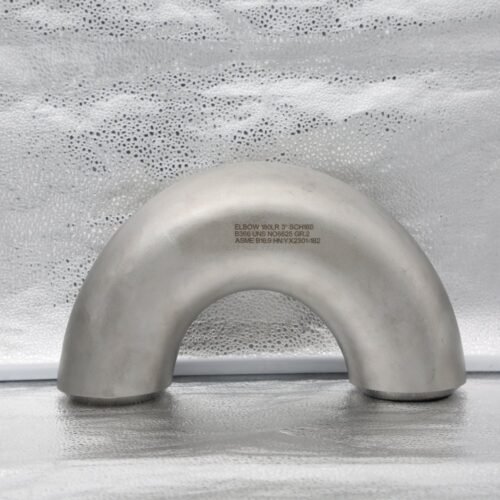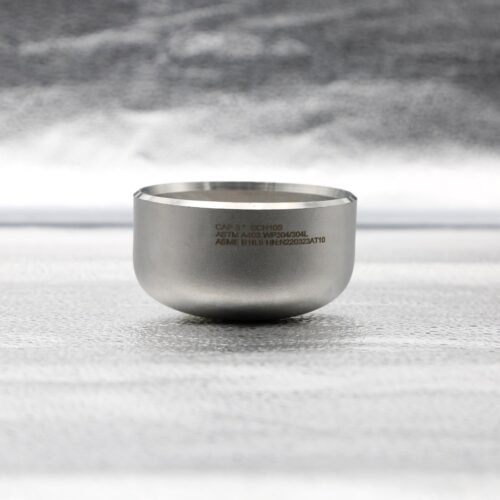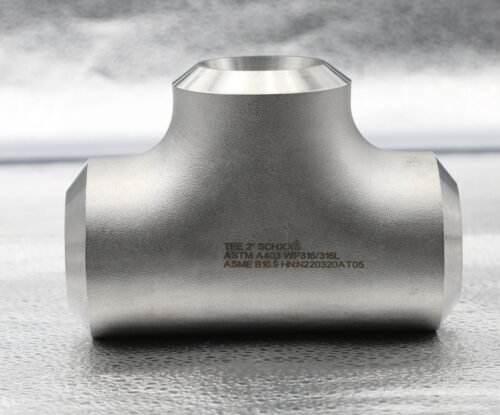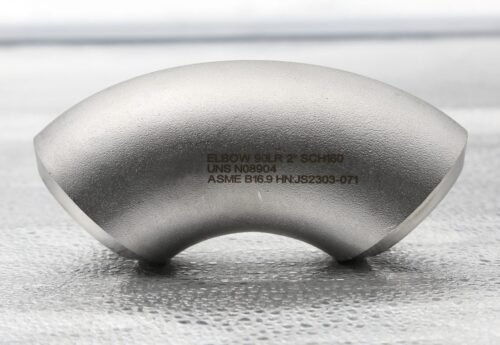
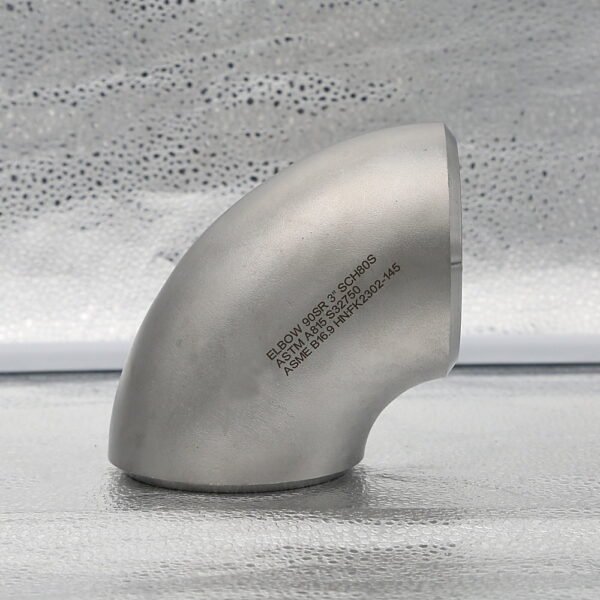
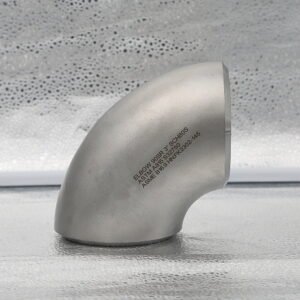
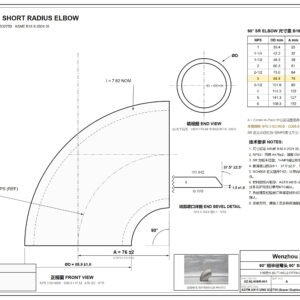
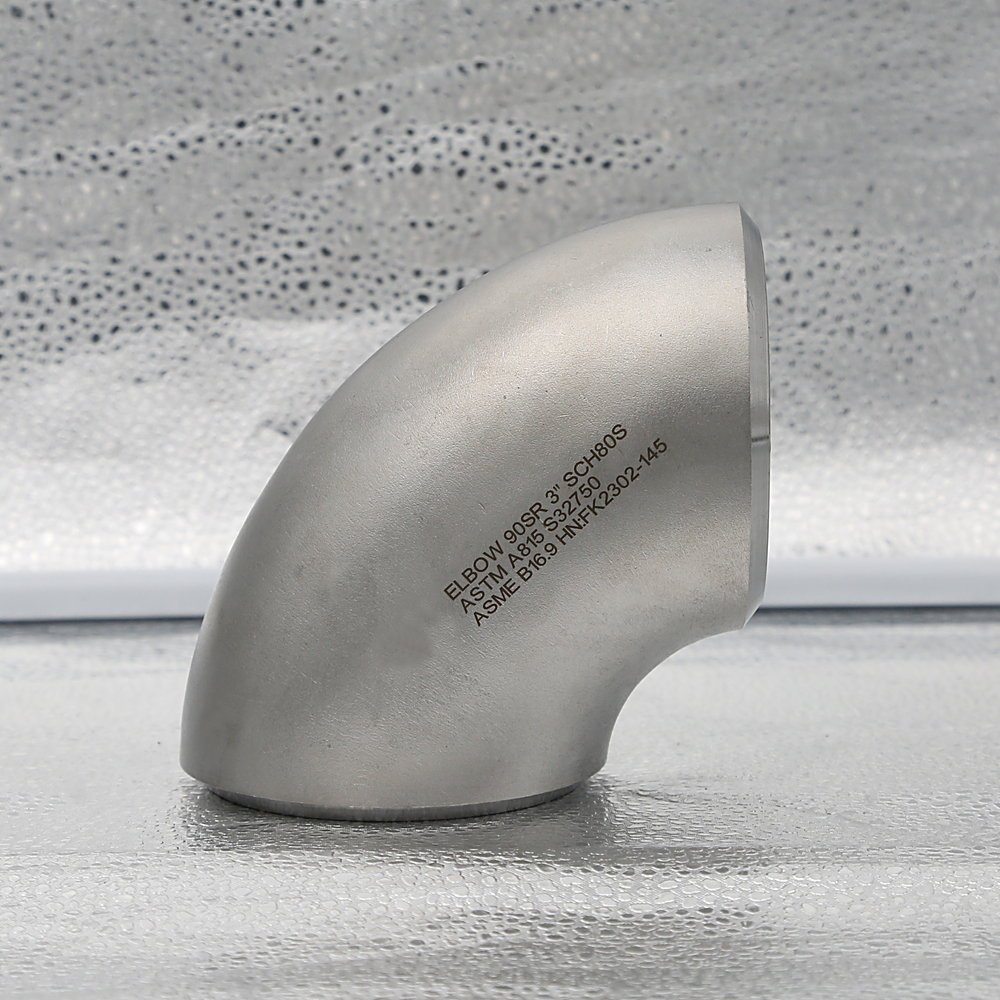
A 90° short radius (SR) elbow is a butt weld pipe fitting that changes the direction of a pipeline by 90° within a compact envelope. Made to ASME B16.9 in stainless steel, duplex (S32205 / S31803), super duplex (S32750 / S32760), super austenitic and nickel alloy grades — the photographed example is ASTM A815 UNS S32750, NPS 3 Sch 80S.
NPS 1–24 (DN25–DN600) per Table 6.1-4 · Seamless & welded · Sch 5S – XXS · special sizes to enquiry
What Is a 90° Short Radius Elbow?
A 90° short radius (SR) elbow is a butt weld pipe fitting that changes the direction of a pipeline by 90° within a compact envelope. Commonly described as a 1D elbow, its nominal centerline radius is based on nominal pipe size, rather than the actual pipe outside diameter. Use the specified standard’s dimension table for manufacturing and inspection.
Wenzhou Xinzhe Tech offers stainless steel, duplex, super duplex, super austenitic and nickel alloy elbow options for project enquiries. Select the grade, wall thickness, construction and governing standard together, and confirm the exact size and delivery requirements in the quotation.
For an ASME B16.9 order, specify the applicable standard edition and material specification together. A dimensional standard defines fitting geometry and tolerances; it does not replace the material specification or establish suitability for a particular process.
90° Short Radius Elbow Specifications
| Product | 90° short radius elbow (90° SR elbow), butt weld fitting |
|---|---|
| Geometry | Compact 90° direction change; commonly described as 1D on a nominal pipe size basis |
| Standard tabulated sizes | NPS 1–24 (DN25–DN600) in ASME B16.9-2024, Table 6.1-4 |
| Construction | Seamless or welded, according to the ordered material specification and manufacturing class |
| Special size enquiries | The original catalogue lists seamless sizes to NPS 24 and welded sizes to NPS 40. Sizes outside Table 6.1-4, including NPS ½ or ¾ and sizes above NPS 24, require an agreed drawing, design basis and supply confirmation |
| Wall options | Sch 5S, 10S, 40S, 80S and other applicable schedules or thicknesses; Sch 160 and XXS where available. Confirm grade, size, schedule standard and manufacturing capability |
| Dimensional standard | ASME B16.9; use the edition specified in the purchase order |
| Other project standards | Requested MSS SP-43, EN, GB/T, SH/T, DIN or JIS requirements need product-scope and edition confirmation; do not assume equivalence |
| Material standards | Typically ASTM A403 for applicable austenitic grades, ASTM A815 for duplex / super duplex grades, and ASTM B366 for applicable nickel alloy grades |
| End preparation | According to material, wall thickness, governing standard and any agreed welding requirements |
| Documents | Specify EN 10204 Type 3.1 inspection certification, traceability and additional inspection requirements in the enquiry |
Note: A dimensional standard does not replace a material specification. Confirm the complete fitting grade, manufacturing class, heat treatment and required examination for the selected construction.
Stainless Steel, Duplex and Nickel Alloy Material Options
Select the material for the actual fluid composition, operating temperature, pressure and corrosion conditions. Commercial grade names help identify options, but the purchase specification should state the exact grade or UNS and the applicable fitting specification.
| Material family | Grade / UNS options |
|---|---|
| Austenitic stainless steel | 304 / 304L / 304H; 316 / 316L / 316H / 316Ti; 317L; 310S; 321 / 321H; 904L |
| Duplex stainless steel | 2205: UNS S32205 or S31803; specify the exact UNS rather than treating the two as automatically interchangeable |
| Super duplex stainless steel | 2507: UNS S32750; UNS S32760 |
| Super austenitic stainless steel | UNS S31254 (254 SMO); UNS N08367 (AL-6XN) |
| Nickel and nickel-copper alloys | Alloy 400: N04400; Nickel 200: N02200; Nickel 201: N02201 |
| Selected high-performance alloys | N06600; N06601; Alloy 625: N06625; C-22: N06022; C-276: N10276; B-2: N10665; B-3: N10675 |
| Selected iron-nickel-chromium alloys | Alloy 20: N08020; N08800; N08810; N08811; Alloy 825: N08825 |
Material specifications: typically ASTM A403 for applicable austenitic grades, ASTM A815 for duplex / super duplex grades and ASTM B366 for applicable nickel alloy grades. Confirm the applicable specification and manufacturing class for each grade, particularly specialty austenitic and high-alloy materials. Grade selection alone does not establish suitability for every acid, chloride environment or high-temperature application.
Short Radius vs Long Radius: How to Choose
| Selection factor | 90° SR elbow | 90° LR elbow |
|---|---|---|
| Nominal geometry | Commonly called 1D | Commonly called 1.5D; use the applicable tabulated dimensions |
| Installation space | Smaller center-to-end envelope | Larger center-to-end envelope |
| Typical reason for selection | Restricted space in skids, packaged equipment or an approved compact layout | A more gradual change of direction where space permits |
| Hydraulic assessment | A tighter turn generally increases local loss compared with comparable LR geometry | Generally lower local loss under comparable conditions; verify the actual fitting and flow conditions |
| Other checks | Erosion, vibration, pressure design, weld access and support layout | Erosion, vibration, pressure design, weld access and support layout |
Choose an SR elbow when the compact envelope is required and the piping design permits it. Do not select on footprint alone: pressure loss depends on geometry, bore, roughness, Reynolds number and adjacent fittings. Material grade and service conditions also affect erosion and corrosion performance.
Pump suction: for pump suction piping, review the pump manufacturer’s inlet-layout requirements. An elbow placed close to the suction nozzle can disturb inlet flow; a short radius elbow is not automatically suitable just because it fits.
90° Short Radius Elbow Dimensions — ASME B16.9
The selected dimensions below are the SI values in ASME B16.9-2024, Table 6.1-4. A is the center-to-end dimension from the intersection of the end centerlines to an end face. OD is the nominal outside diameter at the welding end. Apply the governing dimensional tolerances.
| DN | NPS | OD at bevel (mm) | Center-to-end A (mm) |
|---|---|---|---|
| 25 | 1 | 33.4 | 25 |
| 50 | 2 | 60.3 | 51 |
| 80 | 3 | 88.9 | 76 |
| 100 | 4 | 114.3 | 102 |
| 150 | 6 | 168.3 | 152 |
| 200 | 8 | 219.1 | 203 |
| 250 | 10 | 273.0 | 254 |
| 300 | 12 | 323.8 | 305 |
| 400 | 16 | 406.4 | 406 |
| 600 | 24 | 610.0 | 610 |
Do not calculate the standard SI dimension A by substituting NPS × 25.4 mm. The standard treats its SI and US Customary values as separate systems. For example, NPS 3 has A = 76 mm in the SI table and A = 3.00 in. in the US Customary table; 76.2 mm is an exact conversion, not the tabulated SI value.
Wall thickness is specified separately using the appropriate schedule standard or an agreed nominal or minimum thickness. ASME B36.19 stainless steel schedules and ASME B36.10 schedules are not automatically interchangeable. A schedule designation alone does not establish the finished elbow’s complete wall-thickness distribution.
Before purchase: confirm A, end OD and bore, wall thickness, end preparation and any special drawing dimensions. Reference: ASME B16.9-2024, Table 6.1-4, printed page 10.
Engineering Drawing — 90° Short Radius Elbow (ASME B16.9)
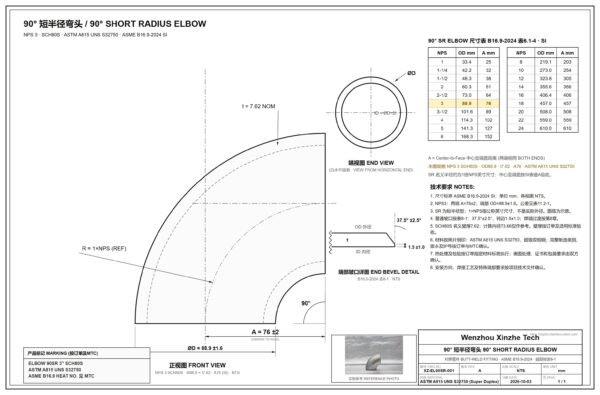
The REV A drawing shows the 90° SR elbow geometry: front view with centerline radius R = 1×NPS (reference), end view, butt-weld end detail per ASME B16.9-2024 Table 8-1 (bevel 37.5° ±2.5°, root face 1.5 ±1.0 mm) and the B16.9-2024 Table 6.1-4 SI dimension table for NPS 1–24. The dimensioned example is NPS 3 Sch 80S: OD = 88.9 ±1.6 mm, A = 76 ±2 mm, t = 7.62 mm nominal. Marking example: ELBOW 90SR 3″ SCH80S · ASTM A815 UNS S32750, with heat number for MTC traceability — the same fitting shown in the photograph.
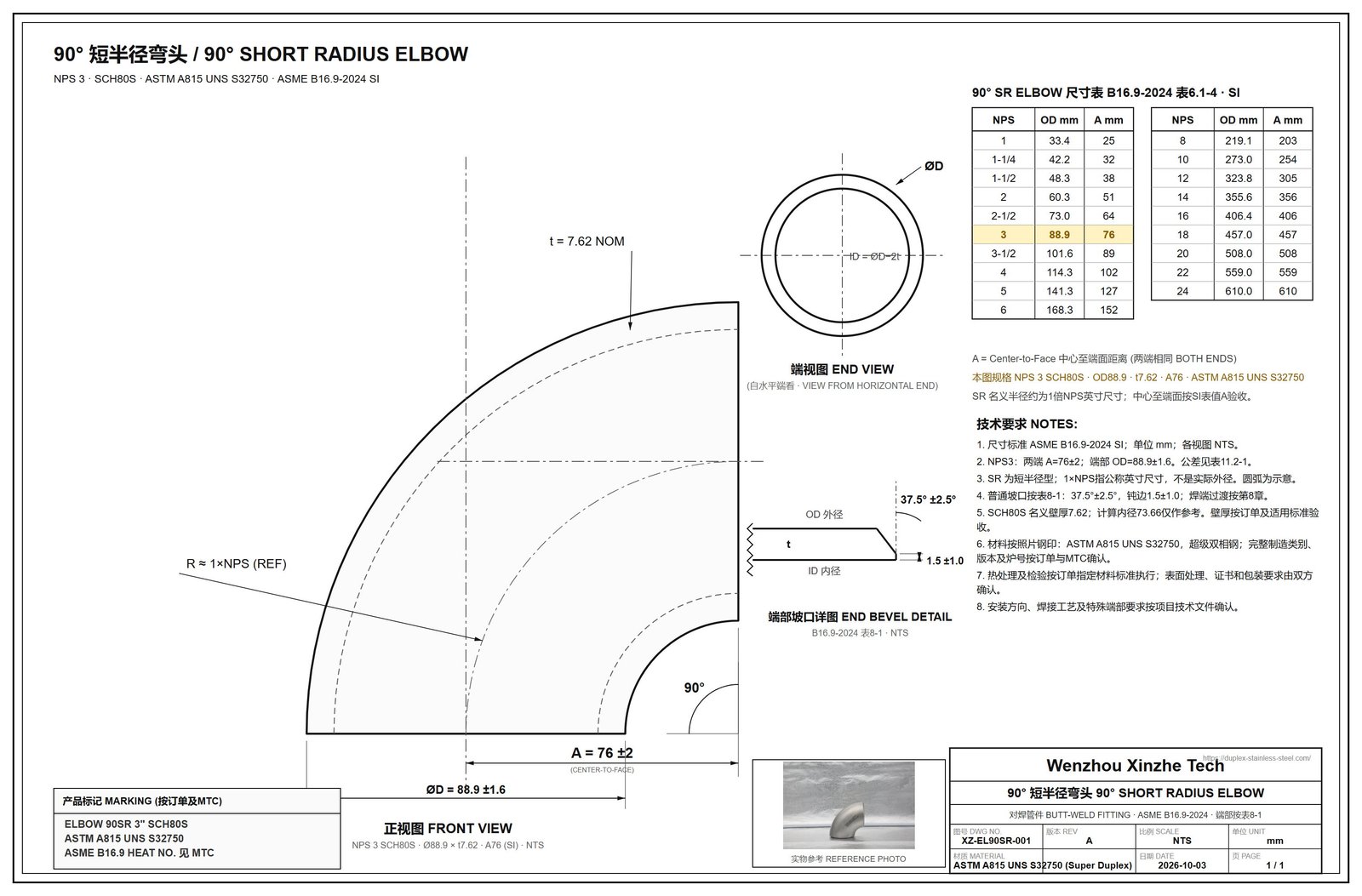
A, OD and the tabulated radii are standard reference dimensions; order values follow the ordered size, schedule standard and material specification. A PDF copy is available via the Drawing Download button above.
Weld End Preparation
Specify welding ends according to the ordered material, wall thickness and governing standard. ASME B16.9 Table 8-1 includes different preparation arrangements for thin, intermediate and thick walls; a single 37.5° bevel description does not cover every elbow.
Where a project specifies alternative bevels, unequal-wall transitions, special bore dimensions or a particular welding procedure, include these details in the purchase drawing and quotation. Confirm which requirements are manufacturing details and which belong to the installation welding procedure.
Manufacturing, Inspection and Certification
Seamless and welded construction must meet the selected material specification and ordered manufacturing class. Forming, heat treatment, weld examination and surface treatment depend on the grade and applicable requirements; agree the delivery condition in the quotation.
- Specify dimensional and visual inspection, end thickness checks and material traceability.
- Request EN 10204 Type 3.1 certification and define the required chemical, mechanical and heat-treatment records.
- Specify PMI, PT, RT, UT, corrosion testing or ferrite assessment where the material specification or project requires them; define the method, extent and acceptance criteria.
- Use ASTM A262 or ASTM A923 only where applicable to the grade and project requirement; do not apply one test to every material family.
ASME B16.9 section 10 does not require a hydrostatic production test of each wrought fitting. Design qualification, material-standard testing, agreed purchase inspections and the piping system pressure test are separate requirements.
Marking should follow the applicable dimensional and material standards, including manufacturer identification, material grade, wall thickness and size as required. Agree any additional heat-number, project or fitting identification requirements.
Applications and Service Selection
90° SR elbows are considered for compact process piping, packaged equipment, skids and other installations with restricted space. Material-specific options support enquiries for chemical processing, oil and gas, water treatment, desalination, power generation and pulp and paper service.
The material must be suitable for the actual temperature, pressure, fluid chemistry and corrosion conditions. Compact geometry does not by itself establish suitability for high velocity, abrasive slurry, pump suction or fatigue-sensitive service.
Food, beverage and pharmaceutical service additionally requires evaluation of hygienic geometry, internal finish, cleanability and weld quality. Standard industrial butt weld fittings are not automatically hygienic fittings.
Request a 90° Short Radius Elbow Quotation
Send Wenzhou Xinzhe Tech the following details for pricing and technical confirmation:
- Product: 90° short radius elbow, with NPS or DN size.
- Material specification, exact grade or UNS, manufacturing class and delivery condition.
- Schedule standard and schedule number, or nominal / minimum wall thickness.
- Dimensional standard and edition; drawing for any special size, A or bore requirement.
- Seamless or welded construction, quantity, destination and required delivery date.
- Design conditions and required certification, examination, additional tests and marking.
Example enquiry: 90° SR elbow, NPS 3, Sch 80S to ASME B36.19, ASTM A815 UNS S32750 (complete grade designation and manufacturing class to be specified), seamless construction, dimensions to ASME B16.9-2024, quantity 50, EN 10204 Type 3.1 certification required. Confirm heat treatment, examination, end preparation and delivery in the quotation.
90° Short Radius Elbow FAQ
What is a 90° short radius elbow?
A 90° short radius elbow is a compact butt weld fitting that turns a pipeline through 90°. It is commonly described as a 1D elbow on a nominal pipe size basis. Manufacturing and inspection dimensions come from the governing standard or agreed drawing.
Does 1D mean the actual pipe outside diameter?
No. The short radius designation uses a nominal pipe size convention rather than the actual outside diameter. Use the specified dimensional table; do not calculate the fitting dimensions from pipe OD.
What is the center-to-end dimension of an NPS 3 SR elbow?
ASME B16.9-2024 Table 6.1-4 lists A = 76 mm in the SI system and 3.00 in. in the US Customary system. Use the chosen system consistently; 76.2 mm is an exact inch conversion rather than the standard SI value.
When should I select SR instead of LR?
Consider SR where installation space is restricted and the piping design permits a tighter turn. Compare hydraulic losses, erosion exposure, equipment inlet conditions, support layout and weld access before selecting the geometry.
Are NPS ½ and sizes above NPS 24 standard SR dimensions?
They are not listed in ASME B16.9-2024 Table 6.1-4, which covers NPS 1–24. Enquire about such sizes as special fittings with an agreed drawing and design basis; confirm manufacturing availability and conformity requirements.
Which materials can be specified?
Options include 304L and 316L stainless steel, duplex S32205/S31803, super duplex S32750/S32760, specialty austenitic grades and selected nickel alloys such as N06625 and N10276. Confirm the exact fitting specification, grade and manufacturing class.
Do all SR elbows have a 37.5° weld bevel?
No. End preparation depends on material, wall thickness and the governing requirements. ASME B16.9 Table 8-1 includes different preparation arrangements; special bevels or transitions must be agreed in the order.
Can inspection certificates and additional tests be requested?
Request EN 10204 Type 3.1 certification and any additional PMI, nondestructive examination or corrosion testing with the enquiry. The quotation and purchase order should define availability, methods, extent and acceptance criteria.
Technical References
Dimensional data: ASME B16.9-2024, Table 6.1-4, printed page 10. Weld preparation: section 8 and Table 8-1. Production testing: section 10. Apply the purchase order edition.
Flow and loss context: KSB centrifugal pump lexicon — elbow flow and losses. Bend geometry, secondary flow and additional loss depend on the complete piping layout; specific arrangements follow the approved piping design.