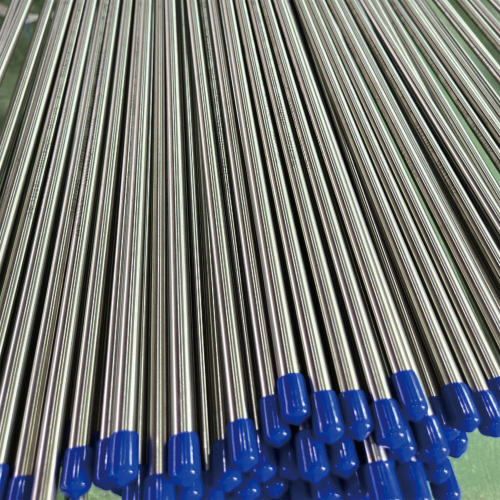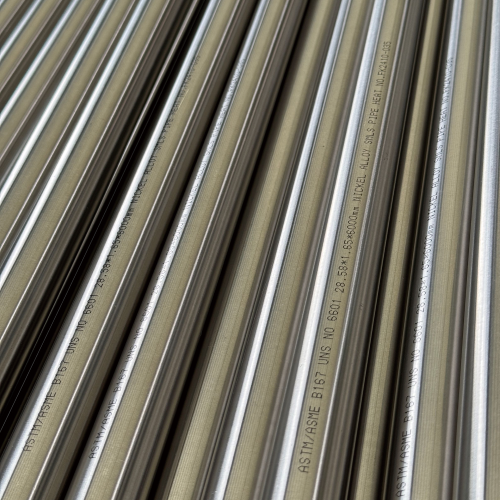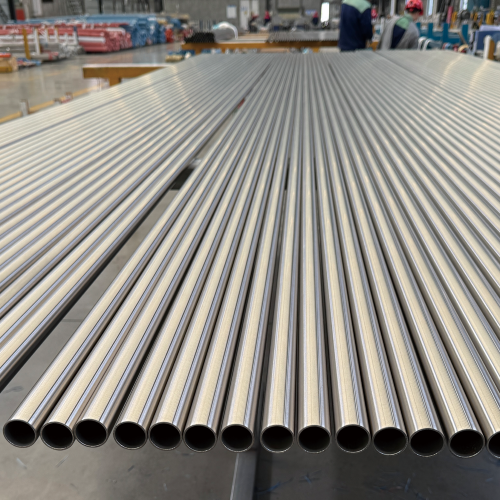

Seamless Inconel 625 Tube: Properties, Specifications, and Industrial Applications
Inconel625 Seamless Tube (UNS N06625 / 2.4856) is a high-performance nickel-based superalloy tubing designed for extreme temperature, pressure, and corrosive environments. Unlike welded tubing, Inconel 625 seamless tubes are manufactured from a single solid billet through extrusion or rotary piercing, ensuring a continuous grain structure and eliminating the risk of weld-related failure.
Thanks to its nickel-chromium-molybdenum-niobium alloy composition, Alloy 625 offers exceptional resistance to oxidation, pitting, crevice corrosion, and chloride stress corrosion cracking. The alloy’s outstanding strength is mainly achieved through solid-solution strengthening by molybdenum and niobium, rather than precipitation hardening.
Because of these properties, Inconel 625 seamless tubing is widely used in aerospace, offshore oil & gas, marine engineering, nuclear power, and chemical processing industries.
Manufacturing Standards and Specifications
For industrial procurement and engineering compliance, Inconel 625 pipes and tubes are typically manufactured according to international standards such as:
Product Form | Seamless Standard | Welded Standard |
Pipe | ASTM B444 / ASME SB444 / ASTM B829 | ASTM B705 / ASME SB705 / ASTM B775 |
Tube | ASTM B444 / ASME SB444 | ASTM B704 / ASME SB704 |
Key standards include:
- ASTM B444 – Standard specification for UNS N06625 and N06852 seamless pipes and tubes
- ASME SB444 – Equivalent specification for boiler and pressure vessel applications
- ASTM B829 – Specification for seamless nickel alloy pipe for high-temperature service
These standards ensure consistent mechanical performance, dimensional tolerance, and chemical composition for industrial applications.
Product Specifications and Data
To provide a comprehensive overview of this high-performance material, here are the detailed technical specifications and performance data for Inconel 625.
The composition of Inconel 625 is carefully balanced to achieve its superior corrosion resistance and high strength.
Note: The Niobium and Tantalum content is often combined, referred to as Nb+Ta.

Inconel 625 is specifically designed to maintain its strength and shape in high-stress, corrosive environments.

These physical properties highlight the material’s ability to perform reliably under a wide range of conditions.

This composition provides excellent strength, corrosion resistance, and metallurgical stability in aggressive environments.

Key Features and Performance Advantages
Exceptional Corrosion Resistance
Inconel 625 offers outstanding resistance to:
- Chloride-ion stress corrosion cracking
- Pitting and crevice corrosion
- Seawater and marine environments
- Oxidizing and reducing chemical media
These properties make it significantly more resistant than conventional stainless steels in acidic and saline conditions.
High Strength from Cryogenic to 1800°F (982°C)
Unlike many alloys that lose strength at elevated temperatures or become brittle at low temperatures, Alloy 625 maintains excellent mechanical properties across a wide temperature range, from cryogenic environments up to 1800°F (982°C).
This makes it suitable for aerospace, nuclear, and high-temperature processing equipment.
High Pressure Integrity
Theseamless manufacturing process eliminates longitudinal weld seams, resulting in:
- Higher pressure tolerance
- Uniform wall thickness
- Improved structural integrity
This is particularly important in hydraulic systems, high-pressure reactors, and subsea equipment.
Excellent Weldability and Fabricability
A unique advantage of Inconel 625 is its excellent weldability without post-weld heat treatment (PWHT). The alloy resists post-weld cracking and maintains corrosion resistance in the heat-affected zone (HAZ).
This allows easier fabrication for complex piping systems and industrial equipment.
Typical Industrial Applications of Inconel 625 Seamless Tubes
Aerospace Industry
Used in fuel lines, hydraulic tubing, and exhaust systems where high temperature and pressure resistance are required.
Oil and Gas Industry
Commonly applied in downhole tubing, wellhead equipment, and sour gas (H₂S) service environments due to its exceptional corrosion resistance.
Marine Engineering
Ideal for seawater piping, submarine components, and offshore platform equipment, thanks to its resistance to chloride corrosion and seawater attack.
Chemical Processing
Widely used in systems handling phosphoric acid, organic acids, and aggressive halide chemicals.
Nuclear Power
Applied in reactor components and control rod tubing, where high strength and radiation resistance are critical.
Inconel 625 vs Inconel 600: Key Differences
Although both alloys belong to the nickel-based superalloy family, Inconel 600andInconel 625 differ significantly in performance.
Property | Inconel 600 | Inconel 625 |
Main Alloying Elements | Nickel + Chromium | Nickel + Chromium + Molybdenum + Niobium |
Strength | Moderate | Much Higher |
Pitting Resistance | Moderate | Excellent |
High Temperature Strength | Good | Superior |
Marine Performance | Good | Excellent |
The addition of molybdenum and niobium in Inconel 625 provides superior resistance to localized corrosion and significantly higher mechanical strength.
Conclusion
Seamless Inconel 625 Tube (UNS N06625) is one of the most advanced nickel-based alloy tubing solutions available for demanding industrial environments. With its exceptional corrosion resistance, high-temperature strength, and superior pressure tolerance, it has become a preferred material in industries such as aerospace, offshore oil and gas, marine engineering, chemical processing, and nuclear power.
For critical applications requiring long service life and reliable performance under extreme conditions,Inconel 625 seamless tubing remains the industry benchmark.