Seamless Super Duplex UNS S32750 Tube (EN 1.4410) – High-Performance Solution for Extreme Corrosion Environments
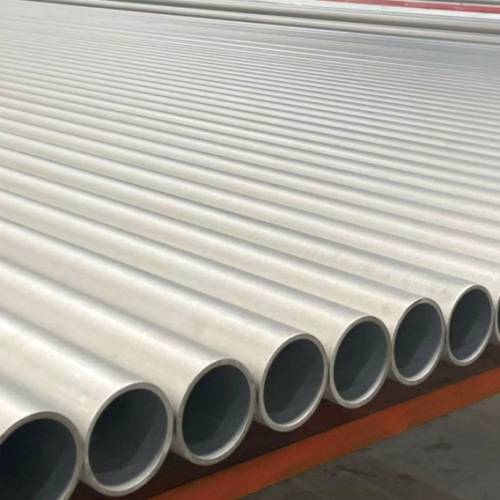
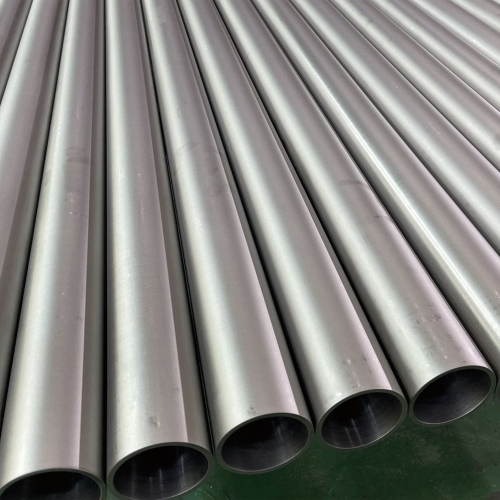
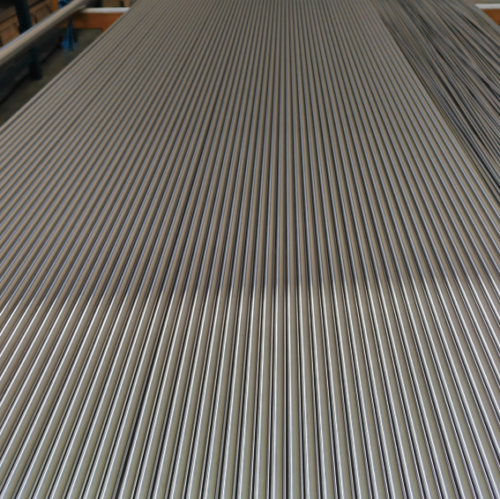
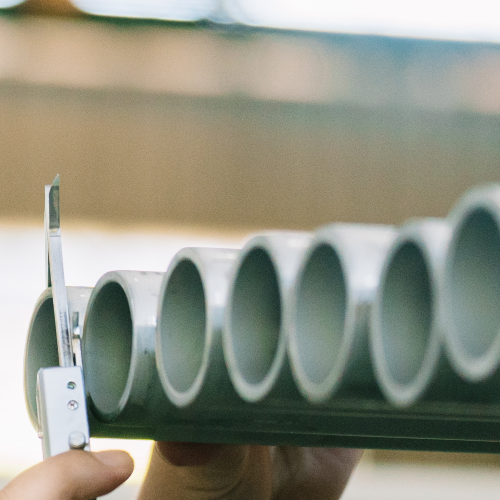
TheSeamless Super Duplex UNS S32750 Tube (EN 1.4410 / Super Duplex 2507) is a premium-grade stainless steel pipe designed for demanding applications involving high pressure, aggressive chloride environments, and critical fluid transmission systems.
Manufactured from a single solid billet through a seamless process, this tube eliminates weld seams, ensuring uniform mechanical properties, superior pressure resistance, and enhanced operational safety compared to welded alternatives.
UNS S32750 is a Super Duplex Stainless Steel (SDSS) with a balanced 50% austenite and 50% ferrite microstructure, combining the advantages of both phases—high strength and outstanding corrosion resistance.
Key Features & Advantages of UNS S32750 Seamless Tube
1. Exceptional Corrosion Resistance
With a Pitting Resistance Equivalent Number (PREN) ≥ 41, UNS S32750 provides outstanding resistance to:
- Pitting corrosion
- Crevice corrosion
- Chloride Stress Corrosion Cracking (SCC)
Ideal for seawater, offshore, and chemical processing environments.
2. High Strength & Lightweight Design
The yield strength of Super Duplex 2507 (UNS S32750) is approximately 2 times higher than 316L stainless steel, enabling:
- Reduced wall thickness
- Lower material weight
- Cost-efficient structural design
3. Excellent Toughness & Durability
Maintains superior impact resistance and ductility across:
- Sub-zero temperatures
- Ambient and elevated temperatures
4. Seamless Structural Integrity
The seamless manufacturing process ensures:
- No weld seam defects
- No heat-affected zone (HAZ)
- Higher pressure ratings and reliability in critical systems
Product Specifications and Data
To provide a comprehensive overview of this high-performance material, here are the detailed technical specifications and performance data for Nickel 200.
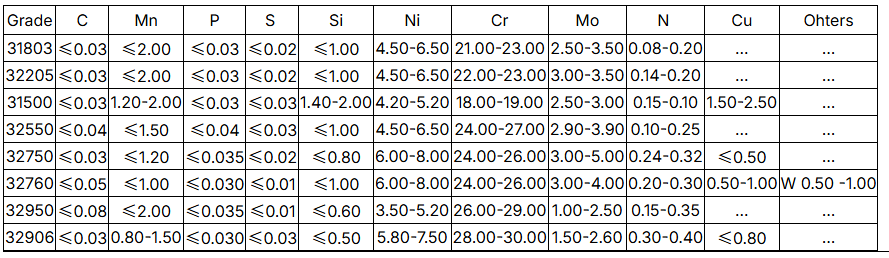
UNS S32750 achieves its “Super Duplex” classification through a high-alloy composition:
NOTE: PREN:Cr+3.3*Mo+16*N≥41
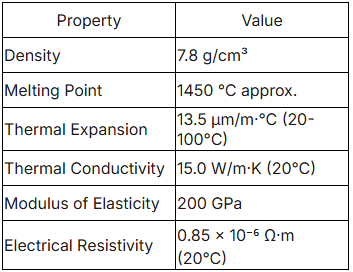
UNS S32750 / 1.4410 is specifically designed to maintain its strength and shape in high-stress, corrosive environments.

These physical properties highlight the material’s ability to perform reliably under a wide range of conditions.
| Specified Outside Diameter (OD) (Inches) | Permissible Variations in OD (± Inches) |
| 1⁄2 to 1 | ±0.005 |
| Over 1 to 1-1⁄2 | ±0.008 |
| Over 1-1⁄2 to 2 | ±0.010 |
| Over 2 to 2-1⁄2 | ±0.012 |
| Over 2-1⁄2 to 3-1⁄2 | ±0.014 |
| Over 3-1⁄2 to 5 | ±0.020 |
| Specified Outside Diameter (OD) (Inches) | Specified Wall Thickness (WT) (Inches) | Permissible Variation (± Inches) |
| 1⁄2 to 1 (Inclusive) | 0.025 to 0.065(Inclusive) | ±0.010 |
| Over 0.065to 0.134 (Inclusive) | ±0.012 | |
| Over 1 to 1-1⁄2 (Inclusive) | 0.025 to 0.065 (Inclusive) | ±0.010 |
| Over 0.065 to 0.134 (Inclusive) | ±0.012 | |
| Over 1-1⁄2 to 2 (Inclusive) | 0.025 to 0.049 (Inclusive) | ±0.011 |
| Over 0.049 to 0.083 (Inclusive) | ±0.012 | |
| Over 0.083 to 0.148 (Inclusive) | ±0.014 | |
| Over 2 to 2-1⁄2 (Inclusive) | 0.032 to 0.065 (Inclusive) | ±0.013 |
| Over 0.065 to 0.109 (Inclusive) | ±0.015 | |
| Over 0.109 to 0.165 (Inclusive) | ±0.017 | |
| Over 2-1⁄2 to 3-1⁄2 (Inclusive) | 0.032 to 0.165 (Inclusive) | ±0.020 |
| Over 0.165 to 0.220 (Inclusive) | ±0.025 | |
| Over 3-1⁄2 to 5 (Inclusive) | 0.083 to 0.165 (Inclusive) | ±0.025 |
| Over 0.165 to 0.220 (Inclusive) | ±0.030 |
Length Tolerance
ForSpecific Cut Lengths, the standard tolerance is +1⁄8 in. [3 mm], -0 in. [0 mm].
Important Note: The values presented here are based on the common tables in the ASTM A789 standard. The full specification, particularly the referenced ASTM A1016/A1016M (General Requirements for Ferritic Alloy Steel, Austenitic Alloy Steel, and Stainless Steel Tubes), contains other essential requirements like straightness and details for tubes with ODs outside of this range. Always consult the latest official standard for design and procurement.
Common Industrial Applications
Thanks to its superior performance, UNS S32750 is widely used in:
Oil & Gas Industry
- Subsea pipelines
- Umbilical tubing
- Heat exchangers in sour gas environments
Desalination Plants
- Reverse Osmosis (RO) systems
- High-pressure seawater pipelines
Chemical Processing
- Acid production systems
- Chloride-rich reactors
Marine & Offshore Engineering
- Shipbuilding components
- Offshore wind structures
- Seawater handling systems
The Precision Manufacturing Process
To ensure the highest metallurgical standards, Nickel 200 seamless tubes undergo a multi-stage fabrication sequence:
- Billet Preparation: High-purity Nickel 200 billets are heated to optimal forging temperatures.
- Rotary Piercing: The heated billet is pierced by a mandrel to create a high-quality”hollow”without any welding.
- Cold Drawing / Pilgering: The hollow shell is precision-drawn through dies to reach the exact outer diameter (OD) and wall thickness specifications.
- Controlled Annealing: The tubing is heat-treated in a controlled atmosphere to restore ductility and achieve a uniform grain size.
- Strict Quality Control: Every tube is subjected to Non-Destructive Testing (NDT), including Eddy Current or Hydrostatic testing, to ensure zero-defect performance in the field.
- Technical Comparison: Nickel 200 vs. Nickel 201
- While both grades are commercially pure nickel, the primary difference lies in their carbon content. Understanding this distinction is vital for high-temperature structural integrity.

- Technical Insight: If your application involves temperatures exceeding 600°F (315°C), Nickel 201 is the mandatory choice to prevent graphitization—a process where carbon precipitates as graphite, leading to severe embrittlement and material failure.