High-Strength Duplex Stainless Steel Tubing for Corrosive Environments
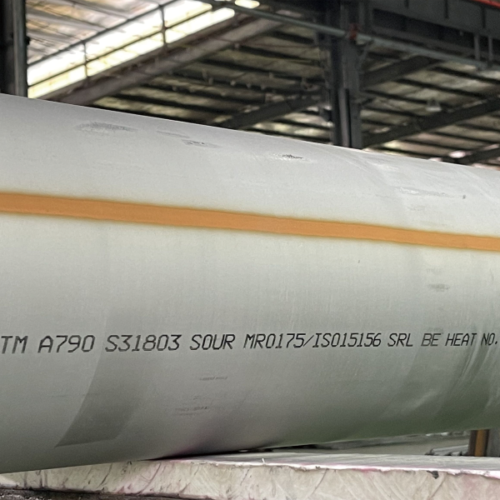
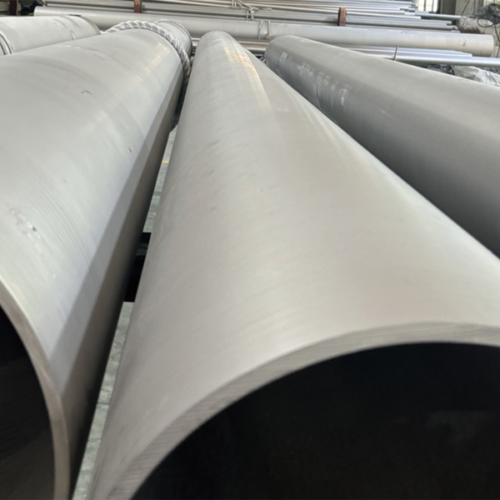
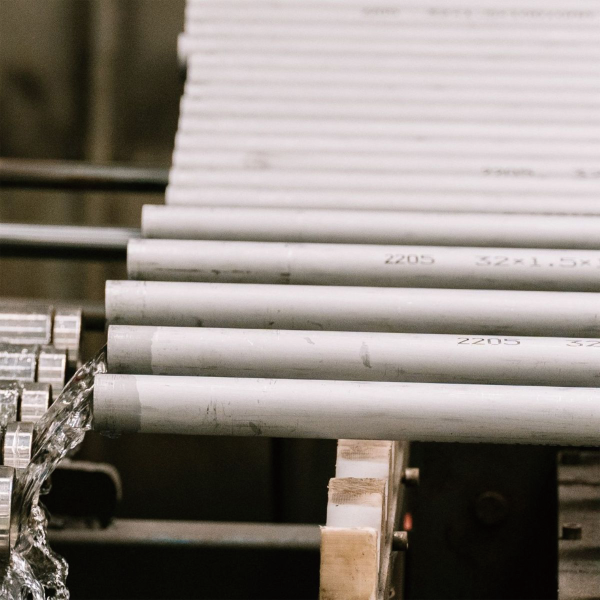
ASeamless Duplex Stainless Steel Tube UNS S32205 (commonly known as Duplex 2205orW.Nr. 1.4462) is a high-performance nitrogen-alloyed duplex stainless steel tubing designed for demanding industrial environments.
Manufactured from a single solid billet through seamless hot or cold forming processes, these tubes contain no longitudinal weld seams, ensuring superior pressure resistance, structural integrity, and metallurgical uniformity compared with welded tubing.
The term “Duplex” refers to the alloy’s dual-phase microstructure, consisting of approximately:
- 50% Ferrite
- 50% Austenite
This balanced structure provides an optimal combination of:
- High mechanical strength
- Excellent corrosion resistance
- Improved resistance to stress corrosion cracking
Duplex stainless steel UNS S32205 is considered an enhanced and tightly controlled version of UNS S31803, with optimized levels of Chromium (Cr), Molybdenum (Mo), and Nitrogen (N) to deliver improved corrosion resistance, mechanical performance, and weldability.
Key Features of Seamless Duplex 2205 (UNS S32205) Tubes
High Mechanical Strength
Duplex 2205 offers yield strength nearly twice that of conventional austenitic stainless steels such as 304L and 316L, allowing engineers to design lighter structures with reduced wall thickness while maintaining structural safety.
Superior Stress Corrosion Cracking Resistance
The duplex microstructure provides excellent resistance to chloride-induced stress corrosion cracking (SCC), making UNS S32205 tubing ideal for warm, chloride-rich environments such as offshore and marine systems.
Enhanced Pitting and Crevice Corrosion Resistance
With its optimized chemical composition, Duplex 2205 typically achieves a Pitting Resistance Equivalent Number (PREN) ≥ 35, ensuring strong resistance to pitting and crevice corrosion in seawater and aggressive chemical media.
PREN Formula
PREN = %Cr + 3.3 × %Mo + 16 × %N
This high PREN value provides significantly better corrosion resistance than standard stainless steels and improved performance compared with the earlier UNS S31803 grade.
Lower Thermal Expansion
Duplex 2205 has a thermal expansion coefficient closer to carbon steel than austenitic stainless steel, reducing thermal stress, distortion, and fatigueinheat exchanger and high-temperature process equipment.
Excellent Toughness at Low Temperatures
Seamless UNS S32205 tubes maintain good mechanical properties and impact toughness at temperatures down to –50°C, making them suitable for low-temperature and offshore environments.
Technical Specifications and Standards
OurSeamless Duplex Steel UNS S32205 / 1.4462 Tubes are manufactured in accordance with major international standards:
Applicable Standards
- ASTM A789 – Seamless and Welded Duplex Stainless Steel Tubing
- ASTM A790 – Seamless and Welded Duplex Stainless Steel Pipe
- ASME SA789 / SA790
Corrosion Resistance Index
- PREN ≥ 35
This ensures excellent performance in chloride-containing environments and aggressive industrial media.
Product Specifications and Data
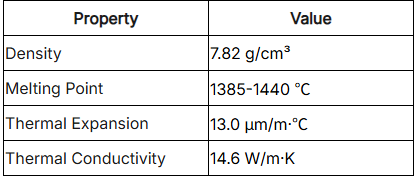
Here are the detailed technical specifications and performance data for S32205 Duplex Stainless Steel.
The key feature is the high Chromium and Molybdenum content, combined with the Nitrogen addition which stabilizes the austenite phase and boosts localized corrosion resistance.
S32205’s dual-phase structure provides a significant increase in yield strength compared to standard austenitic grades.

These physical properties highlight the material’s ability to perform reliably under a wide range of conditions.
| Specified Outside Diameter (OD) (Inches) | Permissible Variations in OD (± Inches) |
| 1⁄2 to 1 | ±0.005 |
| Over 1 to 1-1⁄2 | ±0.008 |
| Over 1-1⁄2 to 2 | ±0.010 |
| Over 2 to 2-1⁄2 | ±0.012 |
| Over 2-1⁄2 to 3-1⁄2 | ±0.014 |
| Over 3-1⁄2 to 5 | ±0.020 |
| Specified Outside Diameter (OD) (Inches) | Specified Wall Thickness (WT) (Inches) | Permissible Variation (± Inches) |
| 1⁄2 to 1 (Inclusive) | 0.025 to 0.065(Inclusive) | ±0.010 |
| Over 0.065to 0.134 (Inclusive) | ±0.012 | |
| Over 1 to 1-1⁄2 (Inclusive) | 0.025 to 0.065 (Inclusive) | ±0.010 |
| Over 0.065 to 0.134 (Inclusive) | ±0.012 | |
| Over 1-1⁄2 to 2 (Inclusive) | 0.025 to 0.049 (Inclusive) | ±0.011 |
| Over 0.049 to 0.083 (Inclusive) | ±0.012 | |
| Over 0.083 to 0.148 (Inclusive) | ±0.014 | |
| Over 2 to 2-1⁄2 (Inclusive) | 0.032 to 0.065 (Inclusive) | ±0.013 |
| Over 0.065 to 0.109 (Inclusive) | ±0.015 | |
| Over 0.109 to 0.165 (Inclusive) | ±0.017 | |
| Over 2-1⁄2 to 3-1⁄2 (Inclusive) | 0.032 to 0.165 (Inclusive) | ±0.020 |
| Over 0.165 to 0.220 (Inclusive) | ±0.025 | |
| Over 3-1⁄2 to 5 (Inclusive) | 0.083 to 0.165 (Inclusive) | ±0.025 |
| Over 0.165 to 0.220 (Inclusive) | ±0.030 |
Length Tolerance
ForSpecific Cut Lengths, the standard tolerance is +1⁄8 in. [3 mm], -0 in. [0 mm].
Important Note: The values presented here are based on the common tables in the ASTM A789 standard. The full specification, particularly the referenced ASTM A1016/A1016M (General Requirements for Ferritic Alloy Steel, Austenitic Alloy Steel, and Stainless Steel Tubes), contains other essential requirements like straightness and details for tubes with ODs outside of this range. Always consult the latest official standard for design and procurement.
Common Industrial Applications
Thanks to its combination of high strength and excellent corrosion resistance, Seamless Duplex 2205 Tubes are widely used in critical industrial applications
Oil and Gas Industry
- Subsea flowlines
- Offshore manifolds
- Sour gas (H₂S) processing systems
Chemical Processing
- Heat exchanger tubing
- Pressure vessels
- Process piping handling acidic and chloride-rich chemicals
Desalination and Marine Engineering
- Reverse osmosis (RO) high-pressure pipelines
- Seawater cooling systems
- Marine structural piping
Pulp and Paper Industry
- Digesters
- Bleach washers
- Black liquor storage tanks
Environmental and Pollution Control
- Flue Gas Desulfurization (FGD) systems
- Industrial scrubbers and effluent treatment equipment
Quality Assurance and Inspection
AllSeamless Duplex Steel UNS S32205 / 1.4462 Tubes undergo strict inspection and testing procedures to ensure compliance with international quality standards.
Material Certification
- EN 10204 3.1 / 3.2 Material Test Certificates (MTC)
Non-Destructive Testing (NDT)
- Eddy Current Testing (ET)
- Ultrasonic Testing (UT)
- Hydrostatic Pressure Testing
Chemical Composition Verification
- 100% Positive Material Identification (PMI)
Corrosion Resistance Testing
- Intergranular Corrosion Testing (IGC)
- Pitting Corrosion Testing according to ASTM G48
Mechanical Testing
- Impact testing
- Flattening test
- Flare test
- Bend test
- Hardness testing
These rigorous procedures ensure reliable performance in high-pressure, corrosive, and mission-critical industrial environments.
Duplex 2205 vs 316L Stainless Steel – Material Comparison
Property | Duplex 2205 (UNS S32205 / 1.4462) | 316L Stainless Steel (UNS S31603 / 1.4404) |
Microstructure | Duplex (≈50% Ferrite + 50% Austenite) | Fully Austenitic |
Yield Strength | ~450 MPa | ~170 MPa |
Tensile Strength | ~620–880 MPa | ~485–620 MPa |
Density | 7.8 g/cm³ | 8.0 g/cm³ |
Pitting Resistance (PREN) | ≥ 35 | ~24 |
Chloride SCC Resistance | Excellent | Moderate to Poor |
Corrosion Resistance | Excellent in chloride and marine environments | Good in general corrosion environments |
Thermal Expansion | Lower (closer to carbon steel) | Higher |
Maximum Service Temperature | ~300°C (for pressure service) | ~400°C |
Weldability | Good (requires controlled heat input) | Excellent |
Cost | Higher initial material cost | Lower material cost |
Typical Applications | Offshore, seawater systems, chemical processing, desalination | Food processing, pharmaceutical equipment, chemical tanks |
Key Differences Between Duplex 2205 and 316L
1. Strength
Duplex 2205 has approximately twice the yield strength of 316L, allowing engineers to reduce wall thickness and overall weight in structural and piping applications.
2. Corrosion Resistance
Duplex 2205 provides significantly better resistance to:
- Pitting corrosion
- Crevice corrosion
- Chloride stress corrosion cracking (SCC)
This makes it ideal for seawater, offshore, and high-chloride environments where 316L may fail.
3. Cost Efficiency in Large Projects
AlthoughDuplex 2205 has a higher raw material cost, the ability to use thinner walls and lighter structures often results in lower total lifecycle cost.
4. Thermal Expansion
Duplex 2205 has a lower thermal expansion coefficient, which reduces thermal fatigue and distortion, particularly in heat exchangers and process equipment.
When to Choose Duplex 2205 Instead of 316L
ChooseDuplex 2205 tubes or pipes when the application involves:
- Seawater or marine environments
- High chloride concentrations
- Offshore oil and gas systems
- Desalination plants
- Chemical processing with aggressive media
- High pressure pipelines requiring higher strength
When 316L is Still a Good Choice
316L stainless steel remains suitable for:
- Food processing equipment
- Pharmaceutical manufacturing
- Low-chloride chemical environments
- Decorative or architectural applications
- Moderate corrosion conditions